“CODA” Confidential

Hollywood Elsewhere saw Sian Heder ‘s much-adored, Sundance award-showered CODA this morning. It’s moderately appealing and nicely made for the most part. Understand, however, that it’s an “audience movie” — aimed at folks who like feel-good stories with heart, humor, romance and charm.

It’s about a shy Gloucester high-school girl named Ruby (Emilia Jones) with a decent if less than phenomenal singing voice. She’d rather attend Boston’s Berklee College of Music than work for her deaf family’s fishing business, we’re told. The film is about the hurdles and complications that she has to deal with in order to realize this dream.

CODA is one of those “real people struggling with life’s changes and challenges” flicks, but given the fishing-off-the-Massachusetts-coast aspect it’s fair to say it’s no Manchester By The Sea — trust me. It’s a wee bit simplistic and schticky and formulaic -— okay, more than a bit — and contains a fair amount of “acting.”


Emilia Jones in Sian Heder’s CODA.

For my money Jones overplays the quiet, withdrawn, still-waters-run-deep stuff, but it’s an honest performance as far as it goes — she has an appealing, unpretentious rapport with the camera. Eugenio Derbez‘s performance as an eccentric, Mexican-born music teacher is probably the film’s best single element. Bearded, baggy-eyed Troy Kotsur and 54 year-old Marlee Matlin are engaging as Ruby’s live-wire parents.

Matlin and Kotsur are the source, actually, of some clunky sexual humor (frisky parents noisily going at it during the late afternoon, randy Kotsur urging chaste Ruby to make her boyfriend wear “a helmet” during coitus, that line of country). Except the jokes don’t really land, or at least they didn’t with me.

In a phrase, CODA is not a Guy Lodge film.

But CODA is an okay film. It works here and there. It didn’t give me a headache. I can understand why some are enthusiastic about it. It deserves a mild pass. Heder is a better-than-decent director.

Friendo: “It’s a by-the-numbers family romcom with an added progressive-minded openness for the deaf.”

(Posted from iPhone while waiting in line at the Tijuana border, heading back into the States.)

Netflix Leads in GG Noms; “Da 5 Bloods” Blanked

7:01 am Update: I have to stream a film within a narrow three-hour window starting right now, so I’ll have to complete and clean up my HFPA story late rthis morning.

Earlier: Netflix is proudly brandishing the top two most-nominated Golden Globe features — David Fincher‘s Mank and Aaron Sorkin‘s The Trial of the Chicago 7. Fincher’s Hollywood-based period drama has corralled six GG nominations — the most of any film. Sorkin’s political courtroom drama is the second most nominated film with five noms.

Spike Lee‘s Da 5 Bloods, a popular film among zeitgeist-influenced critics and the top vote-getter in a Best of 2020 critics poll from World of Reel‘s Jordan Ruimy last July, has been stiffed by the Hollywood Foreign Press Association. I’d heard that the HFPA membership wasn’t big on Lee’s film, but I didn’t think they’d blow it off entirely.

Help me out here…James Corden‘s flamboyant performance in The Prom is competing for a Golden Globe against Sacha Baron Cohen‘s standard-schtick performance in Borat Subsequent Moviefilm and Andy Samberg‘s overpraised Palm Springs performance…what is this?

Cohen was also nominated for a Best Supporting Actor Golden Globe for his Chicago 7 turn as Abbie Hoffman…fine. Judas and the Black Messiah‘s Daniel Kaluuya was also nominated in that category for playing Fred Hampton, despite LaKeith Stanfield‘s performance as William O’Neal being far more worthy.

Best Motion Picture – Drama / “The Father” (Sony Pictures Classics), “Mank” (Netflix). “Nomadland” (Searchlight Pictures). “Promising Young Woman” (Focus Features), “The Trial of the Chicago 7” (Netflix)

Best Actor in a Motion Picture – Drama / Riz Ahmed, “The Sound of Metal” / Chadwick Boseman, “Ma Rainey’s Black Bottom” / Anthony Hopkins, “The Father” / Gary Oldman, “Mank” / Tahar Rahim, “The Mauritanian”

Best Actress in a Motion Picture – Drama / Viola Davis (“Ma Rainey’s Black Bottom”); Andra Day (“The United States vs. Billie Holiday”); Vanessa Kirby (“Pieces of a Woman”); Frances McDormand (“Nomadland”); Carey Mulligan (“Promising Young Woman”)

Read more

Fan Mail

In 1996 at age 23, Joanna Rakoff was hired at the storied New York literary agency Harold Ober Associates, which looked after the interests of the notoriously reclusive J. D. Salinger. Rakoff’s responsibilities included responding to the large volume of fan mail that Salinger was sent, Rakoff would respond with a generic response (i.e., “Salinger doesn’t read fan mail”). She eventually began composing thoughtful replies instead.

Her second novel, “My Salinger Year” (`14), is about Rakoff’s Ober/Salinger experiences. Philippe Falardeau‘s film adaptation, which premiered 11 months ago at the Berlin Film Festival, stars Margaret Qualley as Rakoff and Sigourney Weaver as her boss, Margaret (based on Salinger’s actual agent, Phyllis Westberg).

Warning: My Salinger Year currently has a tepid 68% Rotten Tomatoes rating.

“The gleaming presence of up-and-comer Margaret Qualley bolsters an otherwise mildly entertaining reheating of The Devil Wears Prada story template, only here built around the enduring mystique of J.D. Salinger.” — Jim Schembri.

Sundance “Coda” Sweep

Among the just-announced Sundance ’21 awards: (a) US Dramatic Audience Award: Coda (d: Sian Heder); (b) Special Jury Award for Best Ensemble: Coda; (c) Directing Award: Sian Heder, Coda; (d) Grand Jury Prize: Coda (d: Sian Heder)

Variety‘s Steven Gaydos: “Congrats to Variety Director to Watch Sian Heder!”

Hollywood Elsewhere: “All hail Sian Heder!”

Emotional Snapdragon

I was friendly with Julia Phillips starting around ’94 or thereabouts. Friendly in a certain sense, I mean. I loved her caustic wit and candor and big blue eyes, but I didn’t much care for Julia discharging me from time to time, depending on whatever shortcoming I’d been accused of (or was admittedly guilty of).

I’ve never written this or even admitted it privately but the first stage of our relationship was about Julia having a certain romantic interest and my not being as receptive as she would’ve preferred. Okay, not receptive at all. That resulted in all kinds of bile and battery acid. I tried to be cool and mellow and easy about it, but rejection is rejection.

We gradually became friendly on a mutually respectful palsy-walsy basis. I gave her a lot of notes about her 1995 novel, Driving Under The Affluence, which was more or less a sequel to You’ll Never Eat Lunch In This Town Again (’91). We were reasonably good friends for a couple of years (she was living in a cool Benedict Canyon bungalow at the time), and then we were friendly off and on until…oh, roughly a year before she passed in ’02.

I remember her telling me over the phone one day that she’d been diagnosed with terminal cancer, and my not knowing what to say or feel…I tried weeping but it didn’t come. I was stunned. I’d never known anyone who’d been handed a death sentence.

Julia passed on January 1, 2002. I attended her memorial on the roof of the Empire West condos (1100 Alta Loma Road) and found out that she’d occasionally “fired” other friends from time to time, so I felt a little better in retrospect.

Julia’s hair was dark and smooth and tomboy-ish when The Sting won the Best Picture Oscar in the spring of ’74. Her hair was silvery and glistening and closely cropped when I knew her.

Happiness Is a Decision

Vogue has published a big cover story and photo spread about Angelina Jolie and her six kids living in their big century-old home (formerly owned by Cecil B. DeMille) in Los Feliz.** Jolie’s sit-down with Vogue editor Edward Enninful actually happened three months ago. Long lead times, etc.

At one point Jolie is asked if she’s “at a happy stage in your life.” First of all, nobody is in a happy stage right now…nobody. Not with a gray pandemic cloud hanging over everything. But that aside….

Jolie: “I don’t know. [Translation: No.] The past few years have been pretty hard. I’ve been focusing on healing our family. It’s slowly coming back, like the ice melting and the blood returning to my body. But I’m not there. I’m not there yet. But I hope to be. I’m planning on it.”

After frolicking, cohabiting, birthing and adopting for several years Jolie and Brad Pitt got married in 2014. She filed for divorce in 2016. They’ve been arguing about custody arrangements and whatnot for four and a half, going on five years. Anyone who can’t settle up and come to some kind of equitable arrangement with an ex-husband or ex-wife is not a stable, centered, fair-minded person. Not by my understanding of the term. And you know who pays the price when mommy and daddy fight? The kids do. Any parent who’d rather win the fight against an ex than make things cool for the kids is an ego monster.

It’s always been my suspicion that Angie is the neurotic hard case and that Brad is the comme ci comme ca cool cat. But what do I know?

** Tatiana and I visited and took snaps in August 2018.

HE Critics Choice Nommies

Here are Hollywood Elsewhere’s suggested nominations for the 26th annual Critics Choice Awards. All nominating ballots are due no later than 6 pm Pacific on Friday, February 5th. The awards telecast (CW Network) will happen on Sunday, 3.7.21. Taye Diggs will once again host. Film and television awards will be covered.

I decided upon these nominees because they struck me as the best efforts in their respective categories. I don’t judge creative efforts in a political light. Or because this or that artist has never won before. Or because someone’s life came to a sudden and tragic end. You vote for the work, period.

I wish the CCA organizers had asked for five nominees in the major acting categories, instead of just three. For the Best Supporting Actress category, I could and would have included Candice Bergen‘s performance in Steven Soderbergh‘s Let Them All Talk.

BEST PICTURE
1. Nomadland
2. Judas and the Black Messiah (excellent ’70s Lumet film, great LaKeith Stanfield performance)
3. The Trial of the Chicago 7
4. The King of Staten Island
5. The Father

BEST ACTOR
1. Anthony Hopkins, The Father
2. Riz Ahmed, Sound of Metal
3. LaKeith Stanfield, Judas and the Black Messiah

BEST ACTRESS
1. Carey Mulligan, Promising Young Woman
2. Andra Day, United States vs. Billie Holiday
3. Michelle Pfeiffer, French Exit

BEST SUPPORTING ACTOR
1. Sacha Baron Cohen, Trial of the Chicago 7
2. Paul Raci, Sound of Metal
3. Frank Langella, Trial of the Chicago 7

BEST SUPPORTING ACTRESS
1. Amanda Seyfried, Mank
2. Olivia Colman, The Father
3. Ellen Burstyn, Pieces of a Woman

BEST YOUNG ACTOR/ACTRESS (Under 21)
1. Idrahima Gueye, The Life Ahead
2. Helena Zengel, News of the World
3. Drawing a blank

BEST ACTING ENSEMBLE
1. Trial of the Chicago 7
2. King of Staten Island
2. Ma Rainey’s Black Bottom

BEST DIRECTING
1. Chloe Zhao, Nomadland
2. Emerald Fennell, Promising Young Woman
3. Aaron Sorkin, Trial of the Chicago 7

BEST SCREENWRITING (Original Screenplay)
1. The King of Staten Island
2. The Trial of Chicago 7
3. Sound of Metal

BEST SCREENWRITING (Adapted Screenplay)
1. The Father
2. I’m Thinking of Ending Things
3. French Exit

BEST CINEMATOGRAPHY
1. Mank
2. Tenet
3. Nomadland

BEST PRODUCTION DESIGN
1. Mank
2. News of the World
3. Midnight Sky

BEST EDITING
1. Trial of the Chicago 7
2. Nomadland
3. The Father

BEST COSTUME DESIGN
1. Ma Rainey’s Black Bottom
2. Mank
3. United States vs. Billie Holiday

BEST HAIR & MAKEUP
1. Ma Rainey’s Black Bottom
2. United States vs. Billie Holiday
3. Promising Young Woman

BEST VISUAL EFFECTS
1. Tenet
2. Greyhound
3. Midnight Sky

BEST COMEDY
1. King of Staten Island
2. Borat 2
3. On The Rocks

BEST FOREIGN LANGUAGE FILM
1. The Life Ahead
2. Another Round
3. La Llorona

BEST SONG
1. “Everybody Cries” / The Outpost
1. “Io Is (Seen)” / The Life Ahead
3. “Fight For You” / Judas and the Black Messiah

BEST SCORE
1. News of the World
2. Mank
3. Minari

YOUR NAME AND OUTLET: Jeffrey Wells, Hollywood Elsewhere

Holbrook

There’s nothing sad, much less tragic, about a great actor‘s life ending after 95 years.

Hal Holbrook didn’t really get going as an actor until the early 1950s, when he was in his mid to late 20s. His first performance as Mark Twain happened at age 29. His film debut was in Sidney Lumet‘s The Group (’66), when he was 41 or 42. Holbrook had just turned 50 when he played Deep Throat in All The President’s Men. He played Abraham Lincoln twice, and delivered stand-out supporting performances in Julia (’77), The Fog (’80), Creepshow (‘82), Wall Street (’87), The Firm (’93), Hercules (’97) and Men of Honor (’00). His kindly older guy in Sean Penn‘s Into the Wild (’07) resulted in Oscar and SAG noms for Best Supporting Actor. His performance in That Evening Sun (’09), playing what Variety‘s Joe Leydon called “an irascible octogenarian farmer who will not go gentle into that good night”, was a milestone.

95 robust years, and roughly 70 of them as an actor in good standing.

When I think of Holbrook do I hear the twangy, crackling, sandpaper voice of Samuel Clemens? No, I hear the vaguely testy, whispery voice of Deep Throat. Less was more.

Read more

A Journey of 19 Hours…

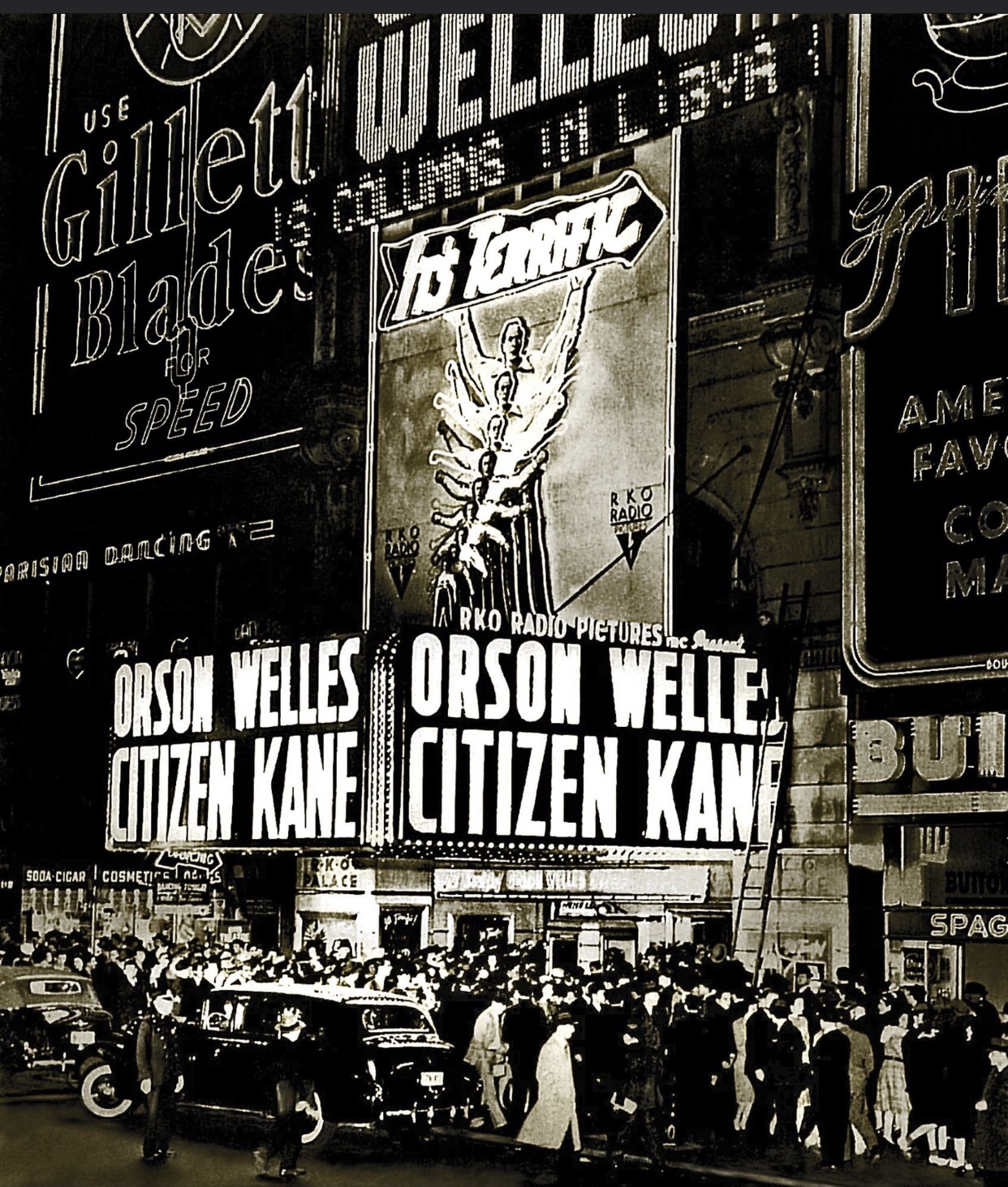
…begins with a single sentence, the first Kindle page, the first whiff. Or, speaking practically, with a careful scanning of the chapters to come. I’ve walked this path and merged with this man many times before…different forms, different narrators…so I feel free to hop around and parachute into this or that chapter at will. Call it a Citizen Nichols approach, co-written in a sense by Mark Harris and Herman J. Mankiewicz.

Another Sundance Pop-Through

Hollywood Elsewhere won’t be able to stream Rebecca Hall‘s Passing until Wednesday, 2.3. But I’m reading and hearing things. Based on a same-titled 1929 book by Nella Larsen and mostly set in 1920s Harlem, Passing is about a married woman of color — Ruth Negga‘s Claire Kendry, whose blonde hair and half northern-European features allows her to pass for white, which was deemed desirable 90-odd years ago.

Claire’s racist husband Jack Belew (Alexander Sarsgard) believes her to be as white as Calvin Coolidge. This, I’m told by a colleague who’s seen it, is a stumbling block. The story focuses on the reunion of Kendry and Irene Redfield (Tessa Thompson) and a subsequent attraction that kicks in and leads to tragic consequences.

Friendo: We’re supposed to believe that Skarsgard, Negga’s very racist husband who uses the N-word freely, is completely oblivious to the fact that his wife may have some black ancestry. He believes he married a 100% white woman.
HE: But Negga, though light-skinned and wearing a blonde wig in the film, is obviously mixed race to some degree. Just ask those scurvy racist crackers in Loving — they did everything they could to break up her marriage to Joel Edgerton. Oh, and I love that Passing was shot in black and white.
Friendo: The film is very well made, but its biggest flaw is the implausibility I mentioned. There is no way a racist husband would not realize that Negga has at least some African-American blood. He even mentions that he hates “them” even if they have a small fraction of non-white DNA.
HE: Jessica Kiang’s Variety review was unqualified in its praise. In her view, the movie is nothing short of heavenly.
Friendo: I assume Coda, Summer of Soul and Passing will all be winning something by the end of the festival.


Tessa Thompson (l.), Ruth Negga (r.) during filming of Rebeca Hall’s Passing.