Kinzinger’s Moment

“Some have constructed a counter-narrative to discredit this process on the grounds that we didn’t launch a similar investigation into the urban riots and looting that occured last summer [following the death of George Floyd]. I was called on to serve during the summer riots as an air national guardsman. I condemn the riots and destruction of property that resulted. But not once [during those disturbances] did I ever feel that the future of self-governance was threatened like I did on January 6th. There is a difference between breaking the law and rejecting the rule of law.” — Rep. Adam Kinzinger, speaking this morning during committee hearings on the 1.6 Capitol assault.

Comment #1: Kinzinger is a decent, thoughtful, principled human being who has no future in the sociopathic bumblefuck cult that calls itself the Republican party.

Comment #2: There were some suppressed tears this morning during testimony from the security guys. Kinzinger also let go with a few. There’s no question in my mind that vivid recollections of the pain and trauma of January 6th fueled this morning’s emotion, but the sniffles are one more reason why Kinzinger has no future as a Republican. Rightwing males don’t relate to politial PDE**. Just saying.

Comment #3: Having observed rioting, looting and the burning of a building during one of the Floyd disturbances in West Hollywood, I can testify first-hand that a lot of people helped themselves to free footwear that day.

Read more

“Poker’s All About Waiting”

“…and then something happens.”

My first impression is that Paul Schrader‘s The Card Counter (Focus Features, 9.10) is almost certainly going to prove a better (punchier, more interesting) poker movie than The Cincinnati Kid. How it stands up to Rounders…we’ll see. Obviously the return of a familiar Schrader archetype — God’s lonely man. “Hello, old friend…it’s really good to see you once again.”

Tattoo: “I trust my life to providence…I trust my soul to grace.”

Read more

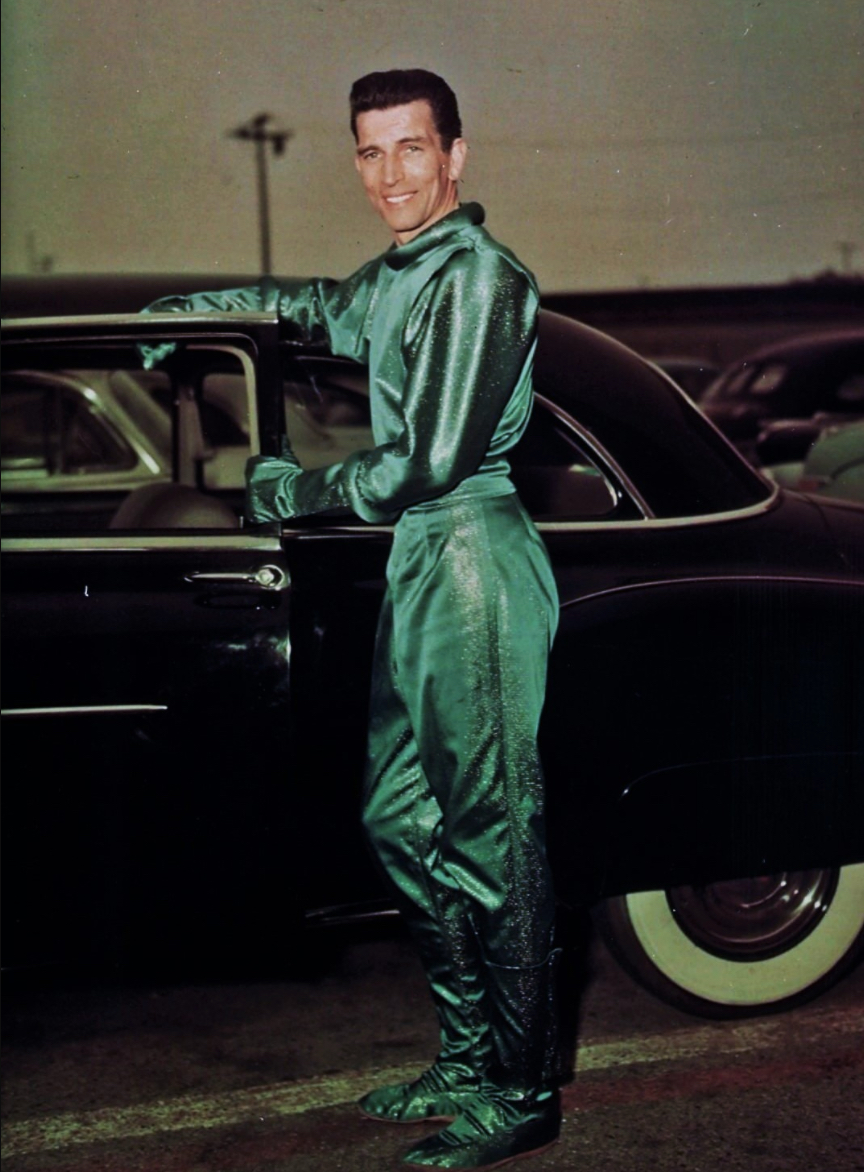
Green Knight ‘51

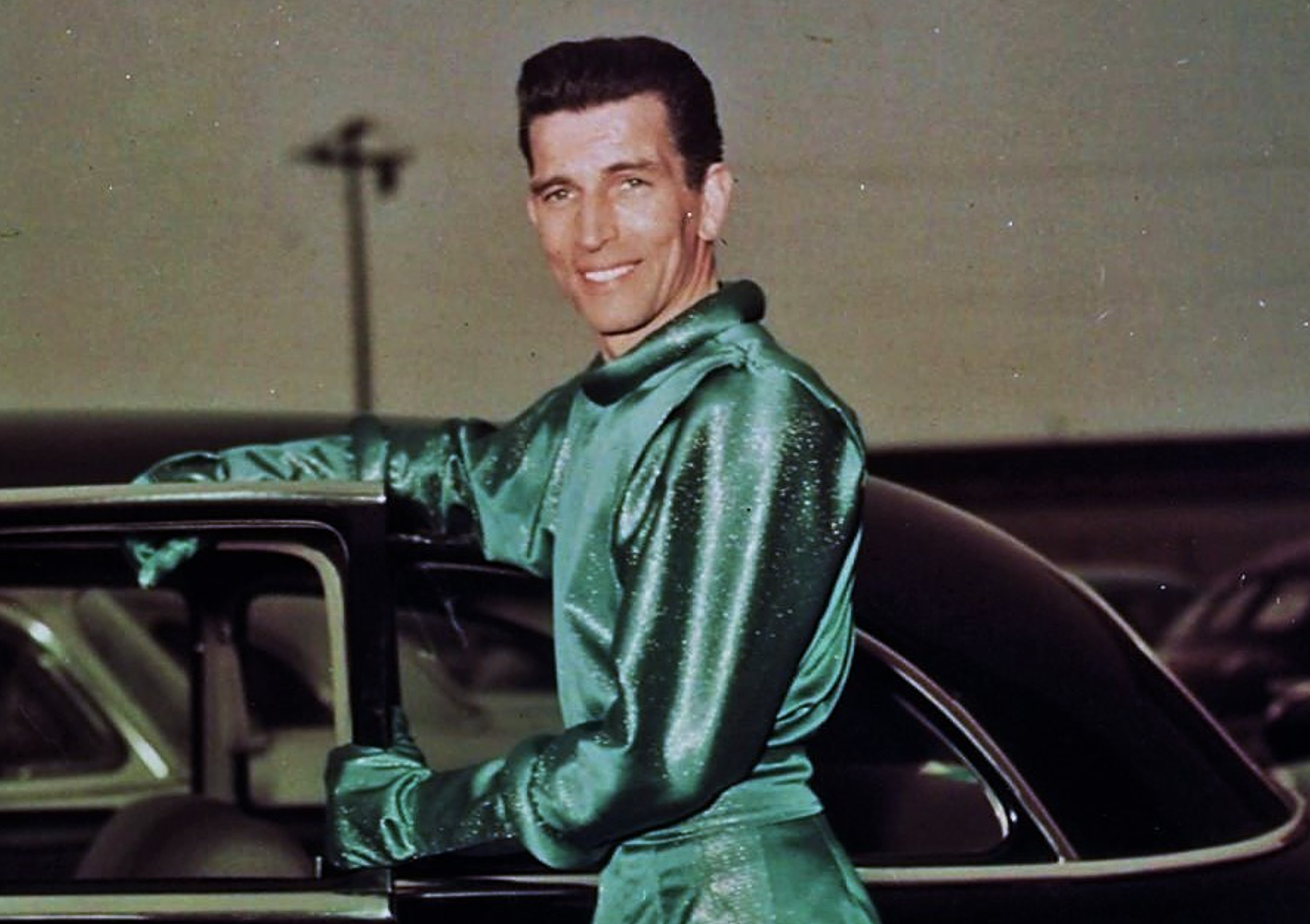
Forwarded last night by Stuart Cohen, this slightly enhanced color snap of Michael Rennie during the filming of The Day The Earth Stood Still (‘51) is, according to Cohen, from a LIFE magazine shoot. The shamrock-green outfit (notice the slight sparkle effect) seems intense, but color flash photography had that effect. Plus the car Rennie was standing next to and the parking lot in which this and other cars were parked and the warm dusk-hour lighting (the area appears remote and undeveloped) seem natural enough.

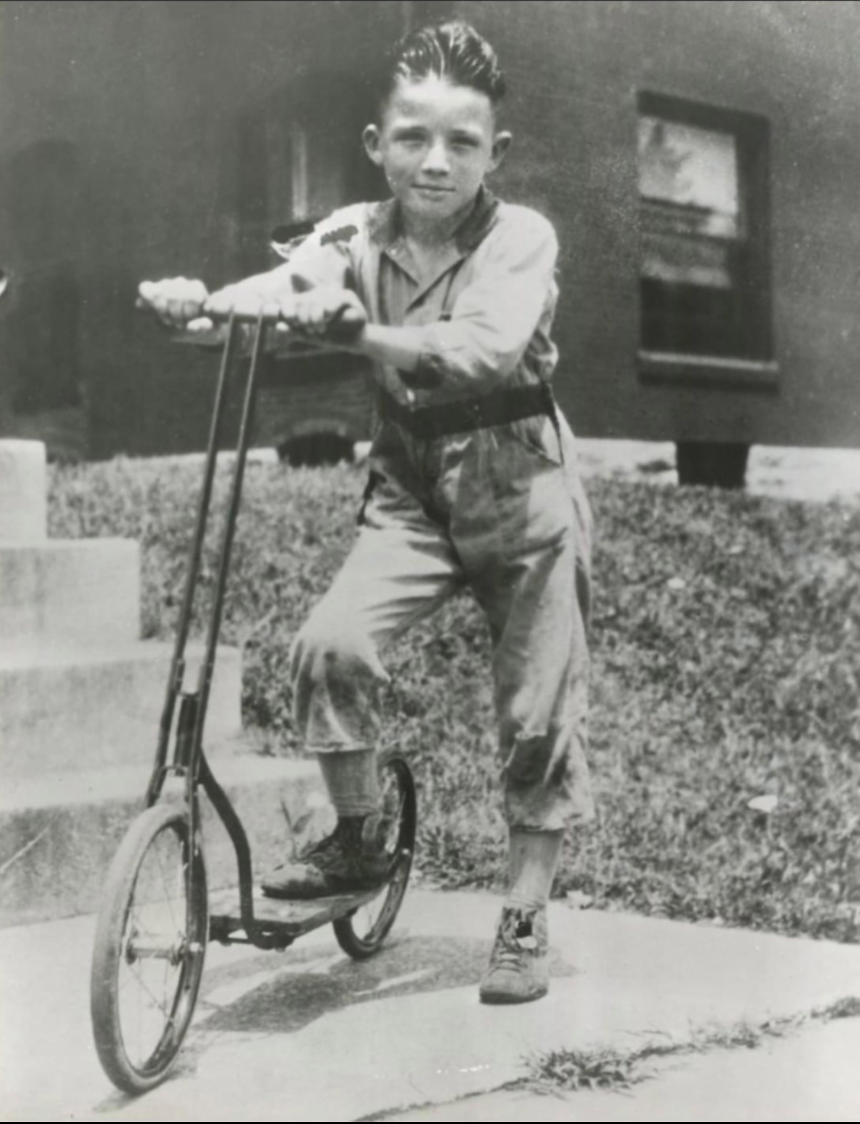
There’s something odd about this kid. That strangely mature-seeming face. He looks like a 27 year-old shrunk down to the size of an eight-year-old. I’m not “odd”-shaming him — he grew into a sane and sensible performer who went on to fame and fortune — but you have to admit he had a peculiar tyke vibe.

Trejo’s Tale

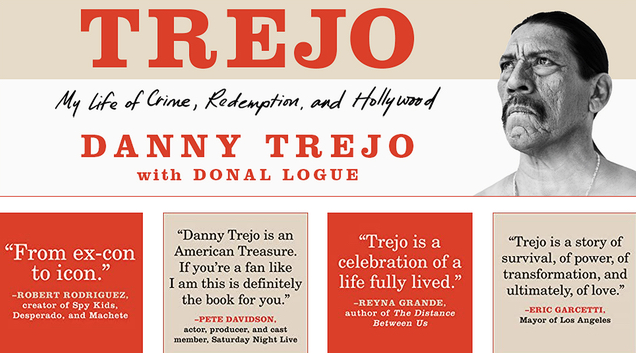
Danny Trejo‘s “My Life of Crime, Redemption, and Hollywood” became an immediate best-seller when it was published on 7.6. It’s currently 11th or 12th on the N.Y. Times list, and was at #3 for a short while. I gave some thought myself to buying the Kindle edition. I’ve always liked Trejo, and I still maintain that his best performance is in Michael Mann‘s Heat (’95)l

I’m presuming that the people who’ve bought the book are mainly Trejo fans…proles who personally relate to his hard-knocks saga and are sold on him as a real-deal sort of guy who’s led a rugged, dangerous life (especially during his tweener and teen years) but managed to save himself and gradually grew into a better person.

A week or so ago I read Lewis Beale‘s Daily Beast profile of Trejo and the book (“Is Danny Trejo the Most Lovably Terrifying Actor Ever?“).

We all understand that most many actors aren’t necessarily gifted at writing, and that whenever they “author” a book it’s usually been tweaked and edited by a professional. In this case the co-author is actor Donal Logue, a longtime friend of Trejo’s.

In a chat with Beale, Logue reveals that Trejo didn’t sit down and try to write anything — not even a half-assed rough draft. He just spoke with Logue extensively, and then Logue did the heavy lifting…hah!

Beale: “The book itself actually got rolling thanks to Logue, whose literary agent suggested Trejo do a work about his life. So Logue wrote a proposal, and then spent two years interviewing his buddy and whipping the project into shape.

“‘He’s the most articulate guy I ever met,’ says Logue, ‘and he pretty much laid out the structure of the story. He has no problem speaking or being quoted, but packaging it, putting some structure to it, fell on my lap.'”

Logue and Trejo first met 22 years ago (i.e., 1999) at an AA meeting. At the time both were acting in Reindeer Games, the Ben Affleck-Charlize Theron film.

Having read the book, Beale offers a criticism about Trejo’s over-reliance on “recovery speak” — the presence of lines like “the magic of forgiveness is so profound, and it starts with us forgiving ourselves.”

Utterances of this sort “are scattered throughout the book,” Beale notes. “You can imagine thoughts like this being articulated at every AA meeting, but their greeting card sincerity can be a bit off-putting.”

Weird Criminal Scenario

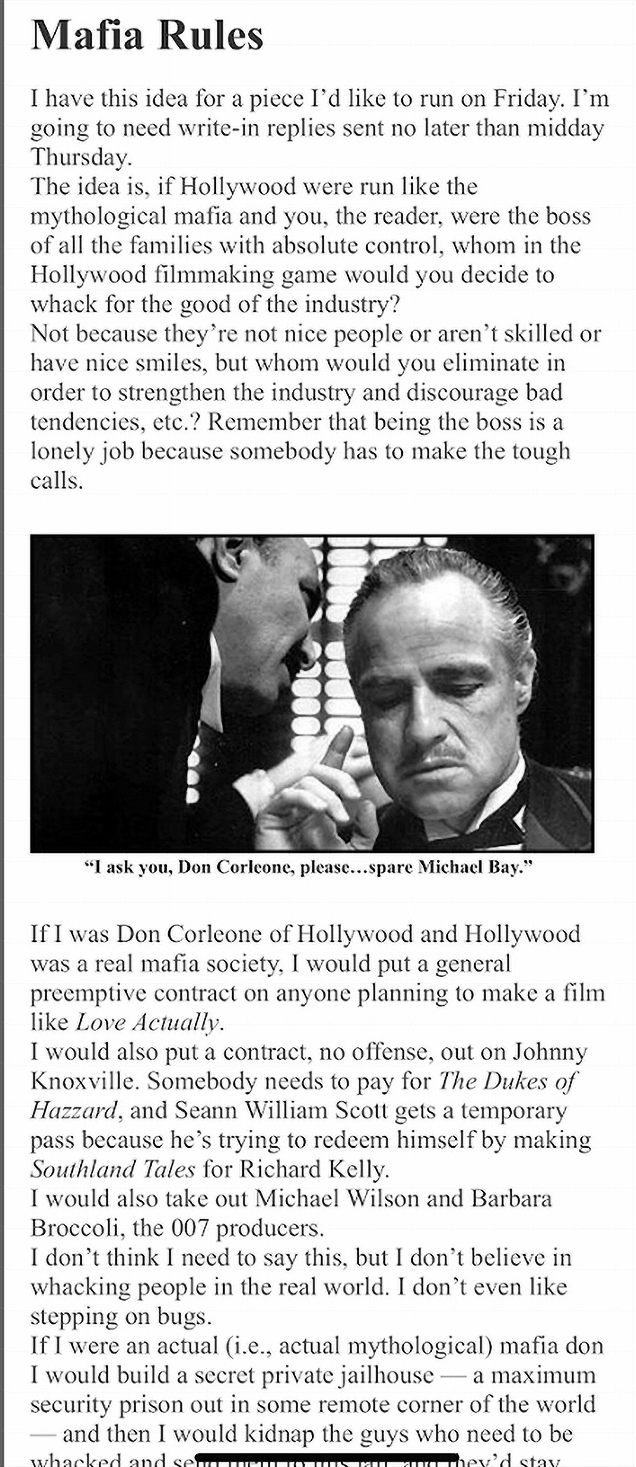
16 or 17 years ago I asked an odd hypothetical of HE readers: If Hollywood was a mythical industry built upon ruthless criminality, and if the HE reader in question was an all-powerful mafia boss who was persuaded that Hollywood had to improve the quality of films or else face financial ruin and a permanent loss of respect, which producers, directors, screenwriters and actors would the big mafia boss get rid of in order to arrest its worst instincts and thereby save the industry from itself?

More concisely: In a lurid, fantasy-realm Hollywood, which filmmakers should be whacked for the good of the industry?

I should immediately add that I’ve always frowned upon violent behavior in any form, and that if I was the hypothetical mafia boss in question I wouldn’t order anyone to be “hit” — I would kidnap the targets and secretly place them under house arrest in a comfortable, handsomely decorated, high-security prison with excellent meals and first-rate wifi. No one would get hurt, but the targeted filmmakers would be removed from the hurly burly and could do no further harm.

Family Matter

Nobody is more excited by color snaps of actors working on legendary black-and-white films than myself. Unfortunately there are very few of them. I’ve posted choice color shots from Some Like It Hot and Dr. Strangelove. In early ’15 I found some cruddy-looking shots from the set of On The Waterfront, taken from the documentary Listen To Me, Marlon.

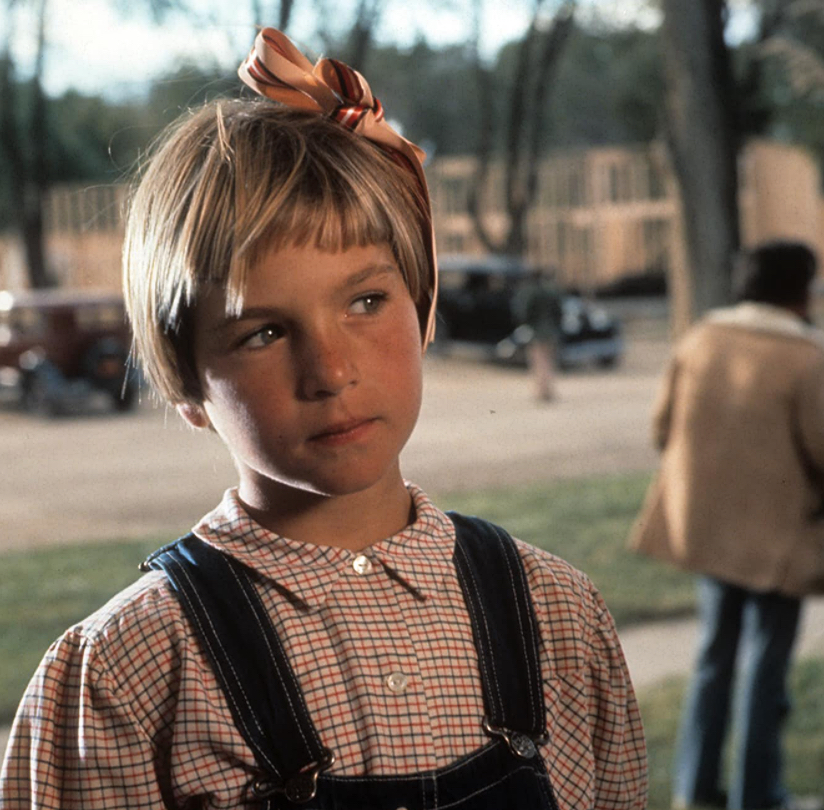
This morning Larry Karaszewski posted a few color images from the set of Peter Bogdanovich‘s Paper Moon (’73), which was shot in Kansas during the summer of ’72. The images came from Stephen Rebello, Larry reports. The only really good one is a magic-hour closeup of Tatum O’Neal.

Ryan O’Neal‘s precocious daughter was eight during filming; she’s currently two and 1/3 years away from the big six-oh.

In the matter of parent-child films Hollywood tends to cast actors who either (a) vaguely resemble each other at best, or (b) don’t resemble each other at all. In this respect Paper Moon was quite the rarity.

Read more

No Mystery

Except for a brief period in the late ’90s when I worked at People magazine’s West L.A office, I’ve been working alone in front of a screen for the better part of 30 years. It’s not the screens, of course, but the writing that matters — the devotional discipline that keeps me sane and opens “the doors” from time to time.

And yet the idea of doing little else but staring at screens for the rest of my time on this planet is haunting, to put it mildly. For the better part of 25 years I did a lot of travelling (i.e., mostly film festivals), but that constant sense of renewal and adventure came to a screeching halt when the pandemic hit 17 months ago. Throughout most of ’20 and the first half of ’21 I’ve been feeling the ennui, you bet.

Before Millennial-Zoomer publicists and marketers decided to destroy HE’s column revenue I could work from anywhere in the world — all I needed were my two laptops, iPhone, charging cords and decent wifi access. Nice gig while it lasted. Nowadays I feel like the Count of Monte Cristo, thinking of little else but escape.

Most people are professionally tied down to one thing or another as a rule, and of course they became double tied down when the pandemic killed human life as we all knew it. So it’s not surprising that with things starting to ease up (despite the unfortunate decision by millions of idiot sociopaths to ignore the vaccine and give the Delta variant a leg up), people are looking to live their lives with a little less in the way of screens, streaming, Zooming, home theatres, etc.

Deadline‘s Michael Cieply, posted earlier today: “Maybe, as a group, we are suffering as a culture from ‘screen fatigue’ — we’re tired of Zoom calls, event television, etc. We are really tired of looking at ourselves on media screens, large and small.

“This was happening before Covid. The secular decline in viewers for the Academy Awards program is my own favorite yardstick for the growing ennui. Even before the lockdowns, the Oscar audience was off 57 percent from its peak. It had fallen in stages, from 55.25 million viewers in 1998 (when Titanic was Best Picture) to less than half that number (when Parasite won) last year.”

HE interjection: Last April’s Steven Soderbergh Oscar show was easily the most calamitous Oscar telecast since ceremonies began to be broadcast in the early ’50s. It sucked the life out of everything and everybody, and all but smothered the 90-year-old lore of this annual industry ritual.

Cieply: “Sure, the virus hurt. But it only hastened what was happening anyway — a very human reaction to the confinement of life on screens. People were getting itchy. They wanted to eat. Breathe. Climb rocks. Fall in love. Have babies. Walk the dog.”

Diverse “Exorcist” & Torturing of Ellen Burstyn

At age 88, Ellen Burstyn has been a combination class act and locomotive for over a half-century (and over 60 years if you count her TV work). She shifted into a big-time film career after her performance in Peter Bogdanovich‘s The Last Picture Show, which will celebrate its 50th anniversary on 10.22.21, and she’s managed to star or costar in mostly cool, tasteful, adult-angled dramas (Alice Doesn’t Live Here Anymore, Resurrection, Requiem for a Dream, W., Pieces of a Woman) over the succeeding decades.

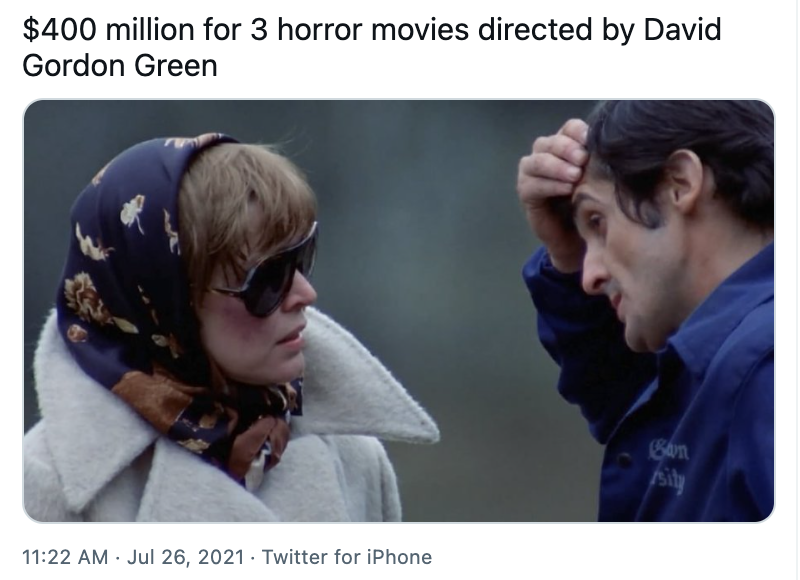
And now, God help her, Burstyn has been sucked into costarring in David Gordon Green‘s $400 million Exorcist trilogy.

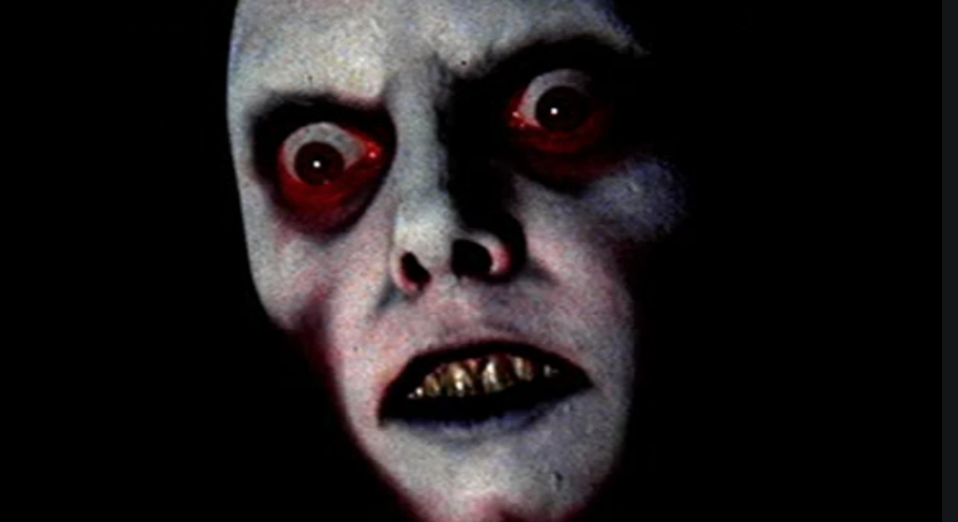
Not because she’s even vaguely interested in revisiting the character of Chris MacNeil, the Hollywood actress whose daughter turned into a demon in William Friedkin‘s The Exorcist (’73), but because she can’t turn down the huge paycheck. She has to take this gig in the same way that Lionel Barrymore had to allow Edward G. Robinson and his gangster goons to stay in his Key Largo hotel — he couldn’t say no to the money.

Key passage from Brooks Barnes’ 7.26 N.Y. Times story about Universal + Peacock spending over $400 million for three new Exorcist films from director David Gordon Green (“Hollywood Head Spinner: Universal Spends Big for New Exorcist Trilogy“):

“Universal is not remaking The Exorcist, which was directed by Friedkin from a screenplay that William Peter Blatty adapted from his own novel. But the studio will, for the first time, return the Oscar-winning Ms. Burstyn to the franchise. (Two forgettable Exorcist sequels and a prequel were made without her between 1977 and 2004.) Joining her will be Leslie Odom Jr., a Tony winner for Hamilton on Broadway and a double Oscar nominee for One Night in Miami. He will play the father of a possessed child. Desperate for help, he tracks down Ms. Burstyn’s character.”

Odom: “Excuse me…are you Chris MacNeil? My God, it’s you! How are you? Are you good? I’m asking because my daughter’s been possessed by Pazuzu and I’m wondering if you’re up for kicking that demon’s ass like you did back in the early ’70s.”
MacNeil: “I’m fine, thanks, but I didn’t do anything. I persuaded a Jesuit priest named Damien Karras to exorcise the demon, and he asked an older priest, Father Merrin, to help him. I didn’t do a thing. All I did was scream and weep and plead for help.”
Odom: “Yeah but you know all about demons and shit, right? You know how to deal with the moving beds and green vomit and all that. You’re experienced.”
MacNeil: “I don’t know anything. I just went through a horrible ordeal a half-century ago, and now I’m almost 90. Find your own exorcist.”
Odom: “But I need your help.”
MacNeil: “What’s wrong with you? Look at me…what am I gonna do?”

Read more

Official Venice ’21 Roster

Except for Ridley Scott‘s non-competitive The Last Duel, most of the headliners for the 78th Venice Film Festival (9.1 thru 9.11, announced this morning) had been predicted or spitballed by HE and World of Reel‘s Jordan Ruimy. The surprise omission of Andrew Dominik‘s Blonde is significant.

Major Competition (13): Parallel Mothers, d: Pedro Almodovar; Mona Lisa and the Blood Moon, d: Ana Lily Amirpour, The Power of the Dog, d: Jane Campion, Official Competition, d: Gaston Depart, Mariano Cohn; Il Buco, d: Michelangelo Frammartino; Sundown, d: Michel Franco; The Lost Daughter, d: Maggie Gyllenhaal; Spencer, d: Pablo Larrain; Freaks Out, d: Gabriele Mainetti; Leave No Traces, d: Jan P. Matuszyski; The Card Counter, d: Paul Schrader; The Hand of God,” d: Paolo Sorrentino; Reflection, d: Valentin Vasyanovych; La Caja, d: Lorenzo Vigas.

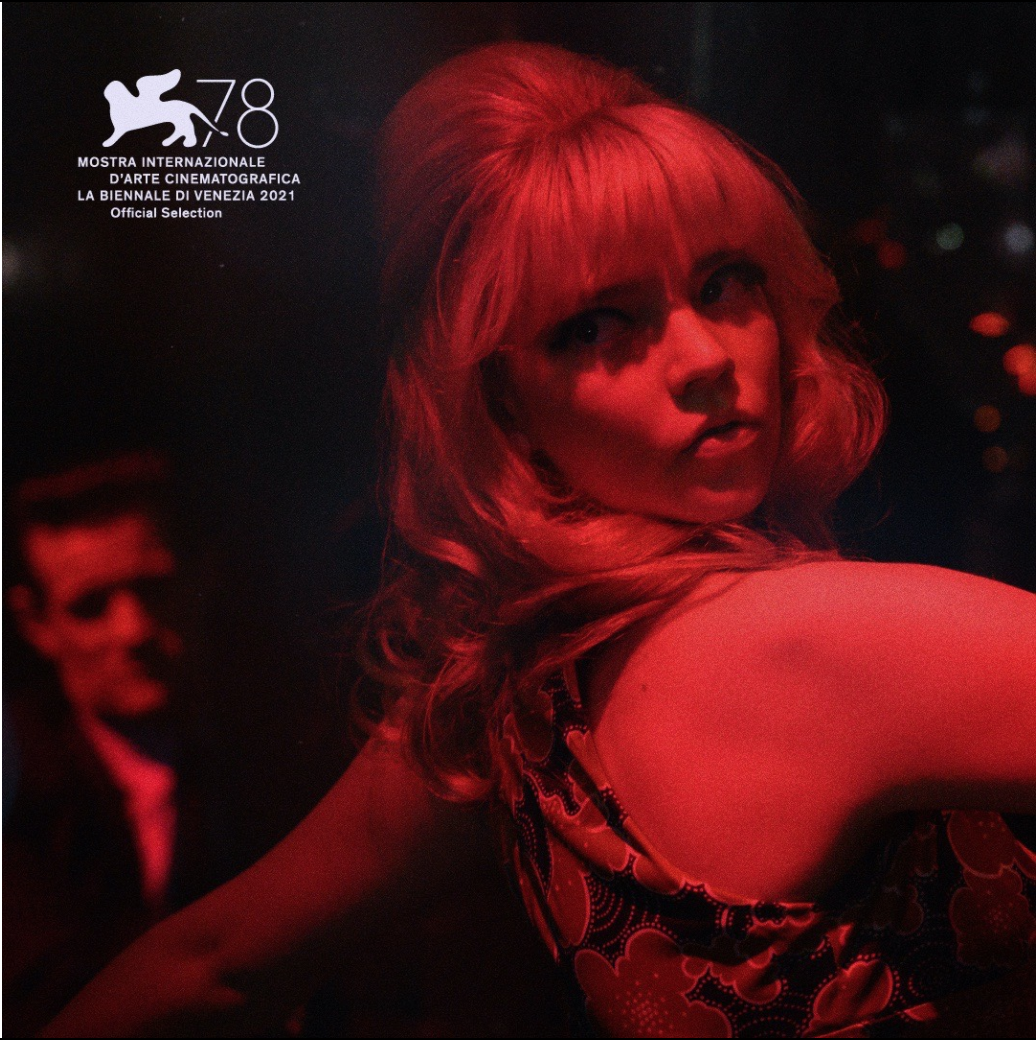
Major Out of Competition (5): Les Choses Humaines, d: Yvan Attal; Halloween Kills, d: David Gordon Green; The Last Duel, d: Ridley Scott; Dune, d: Denis Villeneuve; Last Night in Soho, d: Edgar Wright.

Absence of “Blonde”

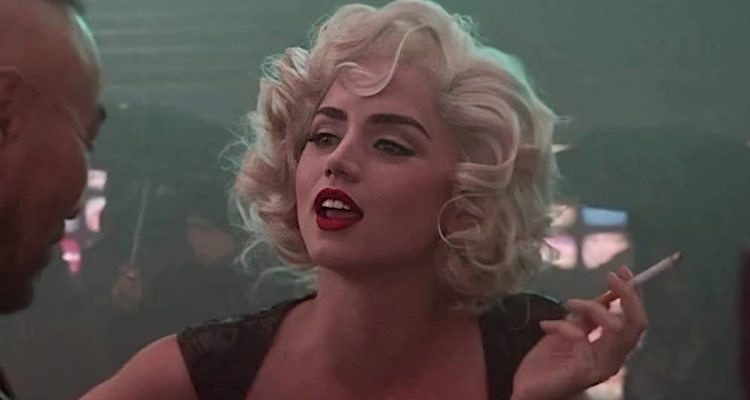
I’ve been waiting a long while to see Andrew Dominik‘s Blonde (Netflix), an adaptation of Joyce Carol Oates’ semi-fictional take on the life of Marilyn Monroe, played in the film by Ana de Armas.

Like Oates’ book, Dominik’s screenplay is semi-truthful in terms of acknowledging significant players in Monroe’s life. Adrien Brody plays a seemingly Arthur Miller-like playwright, Bobby Cannavale plays what sounds like a Joe DiMaggio figure, and Casper Phillipson (who played JFK in Pablo Larrain’s Jackie) is “the President” in Dominik’s film. Plus Tony Curtis and James Dean (played by Michael Masini and Luke Whoriskey) are supporting characters.

As it is (a) seriously intended, (b) began shooting in ‘19, and (c) has had plenty of time to fiddle around in post, I naturally presumed Blonde would turn up at one or both of the premiere ‘21 film festivals, Venice and Telluride. Alas, I’m told this isn’t in the cards. I’m sorry to hear this. Blonde will presumably pop on Netflix sometime in the fall.

“Midnight” Rewrite?

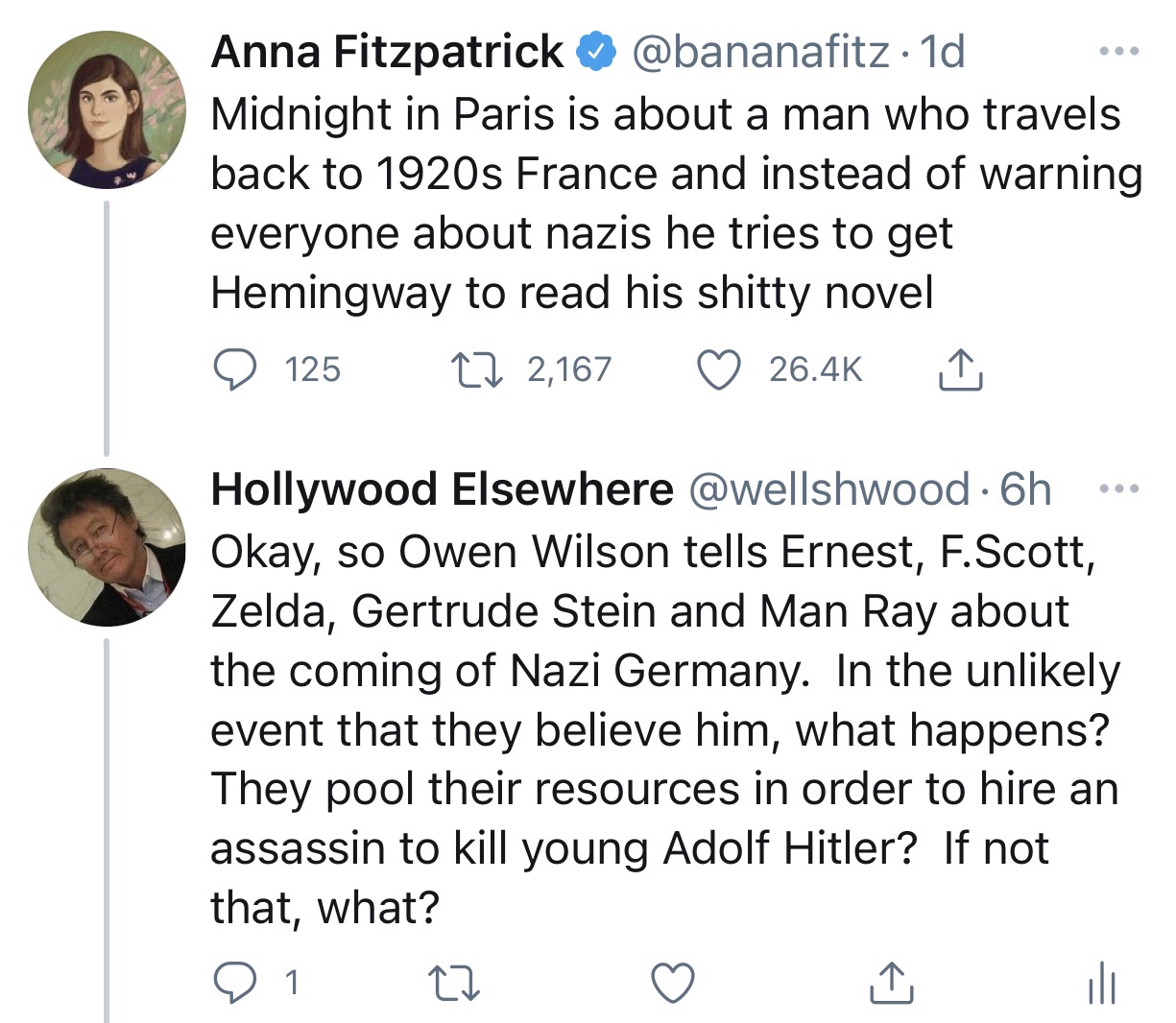
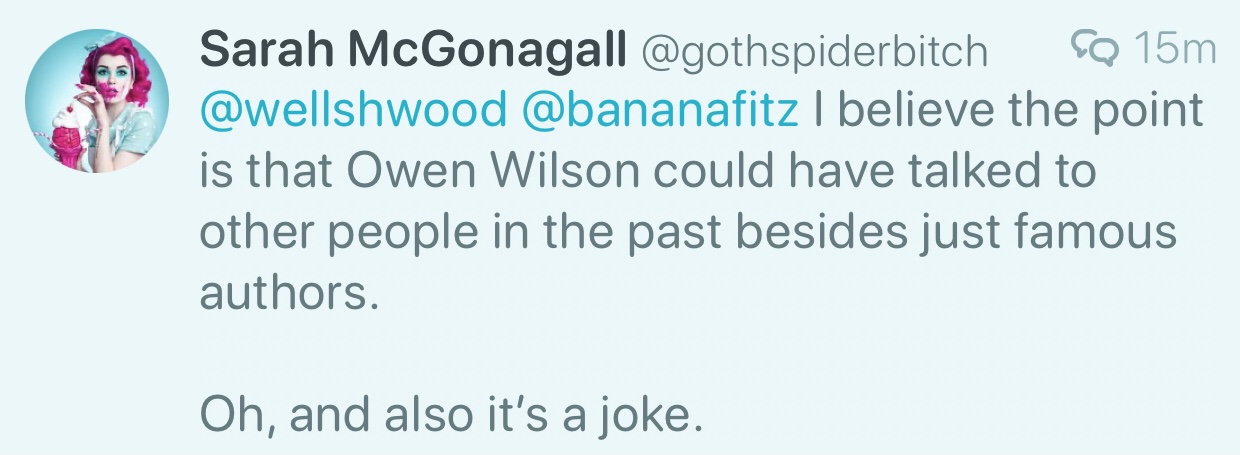
I still don’t get Anna Fitzpatrick‘s insincere (jokey) disdain for Woody Allen’s decadeold literary fantasy. Owen Wilson’s character imagines magical encounters with 1920s “lost generation” luminaries because he idolizes them along with the era they helped define. There’s nothing wrong with or incomplete about the set-up — Fitzpatrick is just pissing on Allen because his pariah status among progressive Millennial women allows her to dismiss his creations willy-nilly.