In Martin Scorsese‘s The Aviator (’04), Cate Blanchett‘s impersonation of Kate Hepburn (that fluttery Bringing Up Baby laugh on the golf course) earned her a Best Supporting Actress Oscar.
Seven years later Blanchett delivered another based-on performance, a financially fallen woman who was half Ruth Madoff and half Blanche DuBois, in Woody Allen‘s Blue Jasmine, this time snagging a Best Actress Oscar.
In Todd Field‘s TAR Blanchett plays an obsessive and emotionally ruthless orchestra conductor who gets eaten by cancel culture. It’s almost certainly her grandest and far-reachingest effort, and the first Oscar-heat performance that is entirely Blanchett’s creation — no echoes of perviously celebrated actress or notorious characters. And there’s really no way she doesn’t win her third Oscar for this on 3.12.23.
Partly because Blanchett’s competition is so comparatively underwhelming — nobody else is quite in her class.
Michelle Yeoh will be Best Actress-nominated for Everything Everywhere All at Once, but the film is a groaner, many 40-plus Academy members hate it, and Yeoh’s nomination will essentially be about her ethnicity…be honest. The EEAAO campaign is based on a DEI approval consensus. Ask yourself what the Academy reaction would be if EEAAO wasn’t about an Asian-American family (white folks don’t verse-jump as a rule but imagine it anyway) and if Yeoh’s character was a stressed-out 50something white woman played by, say, Laura Linney. Or by Jamie Lee Curtis with the IRS investigator played by Yeoh. Be honest.
There’s no question that Michelle Williams as the peculiar, emotionally eccentric mother in The Fablemans is a very broad and actressy performance. While Williams may be be nominated, the buzz has fallen away. I really don’t see her winning.
The most that Till‘s Danielle Deadwyler can hope for is a Best Actress nomination, because that’s as far as things will go.
I’ve heard people say that Margot Robbie‘s feisty, outsized performance in Babylon made them recoil, and given the negative reactions to Damien Chazelle‘s 1920s Hollywood epic I wouldn’t be surprised if Robbie is passed over.
Ana de Armas expertly did what she told to do in dramatizing the ache and trauma of Marilyn Monroe‘s sad life, but Andrew Dominik‘s Blonde is too deeply despised.
Viola Davis in The Woman King? No room at the inn.
I’ve been listening to Sarah Polley‘s podcast chat with Megan Daum (“The Unspeakable”). There’s a special focus, of course, on Polley’s Women Talking (UA Releasing, 12.23). Which many will respect but few outside of the feminist #MeToo take-power community is going to love…behonest.
Within its own realm Women Talking is a “respectable” effort, but it’s still a dialogue-driven political piece — a dimly-lighted, dusk-to-dawn discussion among several Mennonite women in a barn, about how they should respond to a series of horrific rapes within their community. The question is “do we stay or do we go?”
The question for critics is “where is the political upside for me if I say I have problems with this?” The answer is there is none, which is why almost all the critics (especially the wokester Branch Davidian types) have completely fallen for Polley’s film while insisting it’s a Best Picture contender
I know what Women Talking is, good and not-so-good, and that it’s aimed at a certain mindset and demographic even. Anyone who says “this film is just wonderful and eloquent and powerful and you simply have to see it”…if that’s all they say, they’re absolutely lying by omission.
From her first professional encounter with callous behavior on Terry Gilliam‘s The Adventures of Baron Munchausen (’88), Polley has been very concerned about safety…safety on sets, protection from abusers. This is partly who she is, what she’s experienced…naturally she’s drawing from this well. She’s a serious person and a serious filmmaker.
It’s just that her film didn’t speak to my older-white-dude way of seeing things. It certainly didn’t reach in and touch me. I was checking my watch, waiting for it to end.
Women Talking‘s basic idea is basically “stand up to the pigs…condemn them, abandon them, isolate them.” Agreed! But the idea isn’t that a few sex-starved, cold-blooded Mennonite men are brute beasts, but that the overall patriarchy (straight white men) is to be regarded with extreme suspicion as too many white males seem amoral, heartless and exploitive. They probably need to be fought tooth & nail and perhaps even overthrown.
Last September a friend opined that Polley’s film is “almost comically male-hating.” When the wimpy and wimpering Ben Whishaw is the only male they can trust, you know what Polley is saying…”tearful, guilt-stricken-on-behalf-of-their-gender gay men are cool but forget straight guys!!”
Really? There isn’t one decent straight guy in the community who can be trusted? Not one regular dude who’s disgusted by the rapes and pledges to support the women? Imagine how the film could be spiritually and emotionally opened up, so to speak, if there was such a character. Or if a second straight male were to intrude only to speak skeptically about the assaults and argue against leaving.
Women Talking is oppressive because (a) it’s oxygen-starved and visually claustrophobic, (b) there’s no dramatic tension to speak of because from the perspective of the horribly brutalized victims it’s ludicrous to argue for staying, (c) the characters don’t sound like isolated Mennonites but smart, educated, worldly women playing their idea of isolated Mennonites.
Presumably some HE regulars have seen it and would care to weigh in?
So is Cillian Murphy going to spend the entire film looking haunted and forlorn about being the father of the A-bomb? Because I don’t want to go on a guilt trip with this guy. I really don’t. If it hadn’t been for the Hiroshima and Nagasaki bombs that led to Japan’s surrender, my Marine lieutenant dad would’ve been ordered to take part in a huge land invasion of Japan. The odds of survival would have been quite low. Tens of thousands of U.S. servicemen would have died. War is hell, war is horrific…I don’t want to watch a movie about J. Robert Oppenheimer feeling bad and gloomy. I really don’t. He can go through the gloom later in life.
The failure of Everything Everywhere All At Once to be included on the Academy’s short lists for Visual Effects and Makeup & Hairstyling tells us that a serious percentage of Academy members aren’t fans of this A24 release, which suggests that support for it winning the Best Picture Oscar is a lot less than people think. (Yes, it might get nominated in that category.) If EEAAO was the juggernaut that its supporters believe it to be, it would have at least been included among the VFX and Makeup & Hairstyling shortlist nominees.
This is truly the happiest news of the day. I’m levitating off the couch. Thank you, God, for making my day…THANK GOD IN HEAVEN!
I hated this movie…hated it. Have there been any other movies shot in India that reemble The White Tiger? Films that operate in the realm of reality? That aren’t cartoonish, fantastical, ludicrous, overwhelming and over-produced? I’m certain that at least some Indian filmmakers are telling stories in a White Tiger-ish way.
A gang of film-centric Variety staffers — top-dog critics Peter Debruge and Owen Gleiberman plus Lisa Kennedy, Jessica Kiang, Tomris “kill the Golden Globes…no forgiveness!” Laffly, Guy snooty-snoot Lodge and Amy Nicholson — have decided to celebrate Alfred Hitchcock‘s Psycho as the greatest or most artful wowser pulverizer of all time.
The 1960 classic sits atop a list of 100 excellent films, the placement of which I mostly agree with. Except for two selections, that is.
Parasite (#82) turns on a completely idiotic plot contrivance and ends chaotically and nihilistically — obviously a woke diversity fave, but no way does Parasite deserve to be part of the 100 all-time greatest…stop it.
And following the calamitously corrupt Sight & Sound poll of a few weeks ago, Jeanne Dielman (#78) is damaged goods now. I recognize that Variety is trying to counterbalance the Dielman scandal and supply perspective by putting it in 78th place. But by clumsily and bizarrely pole-vaulting Chantal Ackerman’s 1975 film to the #1 position in the S&S poll, which was totally a gender #MeToo call, wokester fanatics have flung permanent egg yolk upon Jeanne Dielman‘s face. It was properly respected and admired before — now it’s a symbol of unwarranted woke power-grabbing.
Who decided on the pecking order of Variety‘s 100 greatest films? No one’s saying. All I’m told is that it was an “exuberant” group effort.
As much as I love and worship Psycho, it has to be stated that it’s a cineaste choice. It doesn’t have the necessary cultural or emotional depth or gravitas to earn the #1 spot. It’s basically a brilliant technical exercise thing — a pure cinema tutorial.
The plot (Robert Bloch was inspired by Ed Gein) is hardly drawn from the same well as, say, Ikiru or 12 Angry Men or The Grapes of Wrath or some other film that reaches down into the cultural terra firma and grapples with life as it actually smells and feels and bruises. It doesn’t really connect thematically with any commonly recognizable aspect of the human experience. It’s about lust, perversity, murder, taxidermy. Definitely a small, rural, oddball movie, but so beautifully assembled, so perfect in every way.
A far greater Hitchcock in terms of touching the common chord and dealing with a recognizable theme is Strangers on a Train. As alternates I would’ve chosen Lifeboat or North by Northwest. The latter is a contrived thriller, but you can feel real life in it — you can feel the actual throbbing world of 1958 and ’59 along with the cynicism and emotional coolness and calculation. The crop-duster sequence alone is just as arresting as anything in Psycho, and arguably more timeless.
Where is the humanity in Psycho? Anthony Perkins‘ psychological confession scene in the motel parlor is simultaneously riveting and sad, but it’s basically a conveyance of how fucked-up Norman Bates is. The most humane, sensible and fair-minded figure in Psycho is Detective Arbogast (Martin Balsam), and he gets stabbed to death. The second most humane is Sheriff Chambers (John Mcintire). The Crane sisters (Marion and Lila) are antsy, wiggy, a bit neurotic. John Gavin‘s Sam Loomis is a bundle of nerves and anxiety and self-doubt.
And c’mon…Janet Leigh’s decision to steal $40K from her boss is pure lunacy. It would be one thing if she’d arranged to meet Gavin in Bora Bora, but to simply drive to Fairvale with $40K in cash is ludicrous.
If you break Psycho down, it’s basically pulp. This happens and then that happens. No one’s idea of deep or stirring or resonant. But I LOVE how it’s all put together. Such smooth and deliberate assurance. How the pieces all fit together like a perfect jigsaw puzzle.
Friendo: “If you break it down, THE MOVIES are pulp. That’s what they are. A pulp form. In Psycho’s case, pulp is made sublime.”
HE to Friendo: “The feeling of dread and foreboding in Psycho all stems from Bernard Herrmann’s music. His score is the soul of the film — not the story or the characters. Screenwriter Joseph Stefano was very upset when he saw the first cut, without the Herrmann music. Hitchcock assured him that everything would be okay once the music was inserted and the cutting was perfectly timed.”
Psycho is utterly brilliant, but it’s also basically “well, if the woman in the window is Mrs. Bates, who’s that woman buried out in Greenlawn Cemetery?”
Update: Moonlight definitely doesn’t deserve to be #42 on this list. It’s two-thirds of a fairly moving film (the last act doesn’t work and its admirers know that), and it was selected by the Variety gang as a political inclusion thing. The main reasons why it won the Best Picture Oscar in early ’18 are (a) two woke checkboxes– Black and gay, (b) Academy members felt they had to counter the #OscarSoWhite narrative of a year or two earlier, and (c) a cheap bullshit award-season narrative that La-La Land had compromised the authenticity of the Black experience by making Ryan Gosling‘s character a big jazz fan, which white guys aren’t allowed to be.
A female friend and her newish boyfriend are embarked on a trip to Cuba, and the first leg was flying yesterday to Mexico City. They stayed there last night.
Lady Friendo: “We just had a dinner and spent the night at a Marriott. Now we are about to leave for Havana. We will stay in Mexico City on our way back.”
HE to Lady Friendo: “You didn’t even walk around, smell the air, sample some local cuisine, look into the faces of local residents? You just stayed inside the walled fortress of a Marriott? That’s not living. Wait…which Marriott? Please don’t tell me you stayed at the one near the airport.”
Lady Friendo to HE: “We arrived late. We were tired and hungry. It’s a time difference. And we are having an early flight to Havana. Yes, we stayed close to the airport. And that was the plan. We will stay and see everything on our way back.”
HE to Lady Friendo: “The flight from LAX to Mexico City is 3 hours and 40 minutes…big deal. It’s shameful to stay in a Marriott. It’s the hotel equivalent of an anesthetic.”
Lady Friendo to HE: “I love everything about this trip! Easy, comfortable, excellent organization of absolutely everything. My way of relaxation.”
HE to Lady Friendo: “And your idea of a great hotel experience is staying at a Marriott? Staying at a Marriot is like shooting heroin into your veins. Marriot hotels are what Hilton hotels used to be. There’s a scene in Billy Wilder‘s Avanti in which Jack Lemmon, a wealthy American businessman, has just entered a lovely old-world Italian hotel, and his first harumphy comment is ‘well, it certainly doesn’t look like a Hilton!’ And the Italian concierge replies, ‘Thank you for the compliment.'”
Lady Friendo to HE: “There are no direct flights to Havana. Marriot was a place to have a nice dinner and spend the night in comfort. I am a person who LOVES COMFORT. Not sleeping on the floors at airports.”
HE to Lady Friendo: “Every rich person in world history (going back to Marie Antoinette) has said exactly the same thing — ‘I love comfort.’ There are richer, more bountiful things to be savored in the world than mere ‘comfort.’ It’s the duty of every serious traveller to look beyond the banality of that.”
Lady Friendo to HE: “I LOVE LUXURY! I’ve had it all my life! Before I moved here. Not going to change my standards again.”
HE to Lady Friendo: “Then, due respect, you have chosen to live within a certain kind of cocoon. Kim Kardashian luxuries. Congrats.”
Director Mike Hodges has passed at age 90. He actually died three days ago (Saturday, 12.17.)
Hodges’ career peaked 51 years ago with the release of Get Carter (’71), made when Hodges was 39 or thereabouts and which many consider his greatest film. Many are also serious fans of Hodges’ Croupier (’98). He also directed Pulp (not that good), Flash Gordon (mildly diverting) and I’ll Sleep When I’m Dead (’03 — a kind of Get Carter remake).
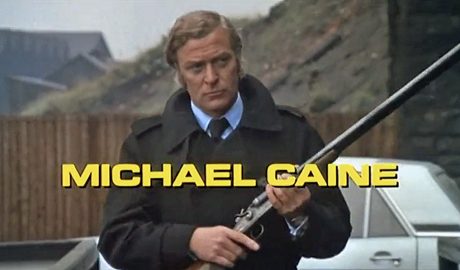
Posted on 7.31.22: Michael Caine‘s Jack Carter is an icy, ruthless bastard in Mike Hodges‘ Get Carter (’71). A real brute and a shit of a human being, and yet curiously emotional in a deeply buried sense. Which is to say a psychopath who cares about “family”, or at least about a certain offspring.
Carter is emotionally enraged, to put it mildly, over the death of his brother and the sexual molestation of his brother’s (or more likely Carter’s) daughter, Doreen (Petra Markham) and yet brusquely efficient when it comes to dispatching certain citizens of Newcastle. Five, to be exact, and none of them assassins or muscle types (like Carter) but basically go-alongers.
What stands out in Get Carter isn’t so much that Caine murders three shady fellows — Ian Hendry‘s “Eric Paice” (whose eyes are like “pissholes in the snow”, Carter observes), Glynn Edwards‘ “Albert Swift” and Bryan Mosley‘s “Cliff Brumby” — but also a pair of youngish, attractive women — Geraldine Moffat‘s “Glenda” and Dorothy White‘s “Margaret”.
These two aren’t killed in the heat of rage or passion exactly, but because of their laissez-faire complicity in nudging Doreen into performing in low-rent sex films. They are disposed of without any feeling, but certainly decisively and with absolute precision. (Okay, Glenda isn’t deliberately killed but she certainly wouldn’t have died if she hadn’t associated with Carter, and her ghastly manner of death — drowning in the trunk of a submerged car — rouses not the slightest emotion on his part.)
What other big-screen bastard has killed two prime-of-life women for what boils down to a moralistic motive — for going along with the corruption of a child? I can think of only one other murderer of this generally cold-blooded sort — Richard Widmark‘s “Tommy Udo” in Kiss of Death (’47), although his victim was an elderly, wheelchair-bound woman (Mildred Dunnock).
Seriously, what other bad guy has iced an attractive younger woman or two without blinking an eye? Caine’s Carter isn’t alone, but the others aren’t coming to me.
I’ve finally decided upon the proper sequential order of HE’s top 30 films of 2022. Almost every title has a link to my original review. (Okay, one or two links don’t connect to a “review” as much as a riff that contains opinions.) But this is the final order, and if you insist on only considering a Top Ten list…
Okay, I didn’t really like The Northman, but I respected it. Excerpt: “Excessive isn’t the word — startling, repetitious, numbing, eye-filling, confounding and yet all of a single harmonious compositional piece. Obviously the work of a serious artist. Handsome, exquisitely composed and about as bereft of humanity as a film in this vein could possibly be.”
In the midst of moving from Los Angeles to Connecticut last July, I forgot to renew my DBA (“doing business as”) certification. I’ve just been told by my principal bank that I have to re-file and re-validate the DBA thing. That means slogging it out yourself and paying a $150 fee to one of those agencies who do it for you. If you know anything about slogging it out on your lonesome you know you have to spend hours online to figure out the process, which usually culminates in physically travelling to some godforsaken Kafka-esque government office and waiting in line…soul-suffocating misery for everyone involved, including the clerks.
Or was it closer to 20 months? When did mask mandates start to lift in a significant way? I can’t even remember.
On 3.1.22 the N.Y. Timesreported that mask mandates were being lifted in “several” states, but didn’t masking more or less stop sometime in the fall of ’21? Can’t recall if it was early, mid or late fall.
I know that when I saw Spider-Man: No Way Home at the Grove on 12.16.21 no one was wearing a mask, and that‘s what I first got Covid (i.e., Omicron). But I didn’t care. Because I was so sick of living a mummified pandemic lifestyle that even being sick felt like a liberation.
For roughly 18 months (3.20.20 to the final third of ’21) we were all part of a Vast Army of Suffocated Shut-Ins.
As we speak I’ve been vaxxed four times and have had two four-day bouts with Covid (the last one two or three weeks ago), and I don’t care if I get it again because it’ll just be another flu-like experience and so what?
I died a thousand times during the pandemic, and I’d rather physically die than go through that again.
For several decades I lived as a free soul more or less, acquiring experience, taking my lumps and loving certain moments, and then life stopped sometime around 3.20.20. It was exotic at first, and then it was hellish. Pandemic gov’t assistance was a lifesaver, of course, but that didn’t change the fact that life just slowed to a crawl.
Mainly because Average Joes are reporting that they’re suffering vague headaches and otherwise (as I noted in my initial reaction) feeling exhausted from the weight and length and gut-slammy nature of Avatar 2. Which is partly attributable to its 192-minute length, and partly due to the heavily-saturated visual spectacle.
It’s too familiar, too cliched, too long and, the underwater stuff aside, not as much of an eye-popper as the original Avatar because it’s basically a flamboyant rehash and because so much has happened big-spectacle-wise over the last 13 years.
Avatar 2 is visually masterful and dazzling from start to finish, yes, but, as the Critical Drinker notes, “visual spectacle is nothing new in movies today, and the more you see it in this film, the less impact it ends up having,..it’s like being fed the world’s largest chocolate cake morning, noon and night for an entire year…eventually you get kinda sick of it.”
Plus pic “suffers from a bloated and self-indulgent screenplay that drags on for at least an hour longer than it needs to…the middle family section is 90 minutes of sheer fucking inertia.”
Boiled down, the too-much-chocolate-cake aspect, I think, is what seems to be giving people headaches. (And which may have killed that poor guy in India.) Chocolate cake overload. Avatar 2 may or may not reach the worldwide $2 billion gross that director-writer-producer James Cameron has said it needs to earn to be considered a success, but like I said a day or two ago, three Avatars on Pandora will be more than enough. Please.
The only thing that could prolong the interest factor would be if a huge Navi army travels to our planet to confront the powers-that-be and…I don’t know, demand that they leave Pandora alone. Perhaps a wild-ass battle of some kind, or perhaps some kind of a Davy Crockett goes to Congress denouement…I don’t know. Okay, confronting humans on their own turf isn’t such a good idea. The Navi can’t breathe our air, for one thing.