Who Killed The Girl?

I saw Dominik Moll‘s The Night of the 12th (Film Movement, 5.19) last night at the delightful New Plaza Cinema (35 W. 67th Street, NYC) — a modest but dedicated arthouse for discerning adults. I was so happy to be sitting in the front row of a theatre where I belonged, a Film Forum- or Thalia-like shoebox…whistle-clean, air-conditioned comfort, ample leg room and surrounded by older folks not eating popcorn.

The film is a mostly fascinating, vaguely haunting, Zodiac-like police investigation drama that won six Cesar awards (Best Picture, Best Director, Best Adaptation, Best Supporting Actor, Most Promising Actor, Best Sound) last February.

It’s a shame, I feel, that almost no one in this country is going to pay the slightest amount of attention. It’ll eventually stream, of course, but it probably won’t attract anyone outside Francophiles and the fans of grim police procedurals, mainly because it doesn’t do the thing that most people want from such films, which is the third-act delivery of some form of justice or at least clarity.

Night is about a cold case — a prolonged and frustrating and ultimately fruitless investigation of a savage murder of a young girl in Grenoble, France…frustrating and fruitless unless you tune into the film’s forlorn wavelength, which is about something more than just whodunit.

It’s based on a fact-based 2020 novel by Pauline Guéna.

The victim is Clara (Lulu Cotton-Frapier), a beautiful, blonde-haired 21 year-old student who lives with her parents. After leaving a party in the wee hours and while walking down a moonlit street, she’s approached by a hooded wacko and set aflame — a horrible sight. The film is about two Grenoble detectives, played by Yohan (Bastien Bouillon) and Marceau (Bouli Lanners), as they interview and investigate several potential killers whom the casually promiscuous Clara had been sexual with at different times.

All of these guys are scumbags of one sort of another, and you start to wonder why she didn’t have at least one male friend or lover who wasn’t an animal. The digging goes on and on, but no paydirt.

The essence of The Night of the 12th is militant feminism mixed with intense grief. It’s saying there’s a subset of appallingly callous young men out there today…aloof, cruel, thoughtless dogs who sniff and mount out of raw instinct, and this, boiled down, is what killed poor Clara.

Last month in Cannes Martin Scorsese said that Killers of the Flower Moon wasn’t a whodunit but “a who-didn’t-do-it?”

Same with Night — Yohan concludes at the end that “all men” killed Clara, and so among the Cesar voters and the guilty-feeling industry fellows who felt an allegiance with their feminist collaborators… this water-table sentiment, an adjunct of the Roman Polanski-hating faction, is presumably what led to The Night of the 12th‘s big sweep.

By this measure Night isn’t about a “cold case” — it’s a kind of hot-flush case that points in all kinds of directions to all kinds of potential young-feral-dog killers…a limitless (in a sense) roster of bad guys.

In order to make this point about “all men” being at fault, the film necessarily can’t allow the Grenoble detectives to finally nab a single killer.

But of course, Clara’s curious attraction to bad boys and her generally impulsive nature was at the very least a significant factor in her fate. She was obviously flirting with this kind of snorting louche male for a deep-seated reason of some kind. Clara could have theoretically been a cautious or even withdrawn type, barely experienced in sex and sensuality and perhaps even prudish, and she still might have been torched by a sicko. But you’re not going to tell me that “playing with bad boys” wasn’t central factor.

Sensible women choose their lovers sensibly, and Clara didn’t roll that way. If you don’t use common sense in your romantic life, sooner or later the bad stuff will rub off.

So where did the bad-boy fetish come from? In The Limey (’99) we understood why Terrence Stamp’s daughter Jenny was attracted to dangerous men, but Clara’s dad (Matthieu Rozé) is a moderate mousey type and her mom (Charline Paul) is a diligent homemaker. So how and why did she develop the appetite?

The screenwriters (Moll and Gilles Marchand) don’t even toy with this emotional dynamic as they don’t subscribe to a belief that Clara might have flown too close to the flame. They seemingly believe that Clara was 100% innocent of any dangerous behavior by way of skunky boyfriends. I think that’s a dishonest attitude, and so I didn’t finally buy what the film was saying.

I saw the film with mostly older singles and straight couples, but there were at least two female pairs who were kind of sniffling and crushed at the end — the same emotional vibe I felt among women after a Toronto screening of Boys Don’t Cry.

Read more

Fate Unfulfilled

SPOILERS WITHIN: Celine Song‘s Past Lives (A24) is a very subtle, oh-so-very-gently expressed love story — a story about things unsaid and certainly not acted upon.

The action between the lovers, Nora and Hae Sung (played as adults by Greta Lee and Teo Yoo), happens in three stages.

One, a primal and very nourishing attraction they feel as 10-year-old children in Seoul, only to be separated when Nora’s parents move the family to Toronto. Two, aspiring playwright Nora and aspiring engineer Hae Sung Skype-chatting at age 20 but never arranging to meet. And three, both still wanting to see each other after a separation of 20 years and with Hae Sung having flown to New York to visit the now-married Nora, both conveying volumes of feeling with their eyes but doing zip to try to make this long-simmering romance finally kick into gear.

You can feel the “In Yun” every step of the way, but Nora and Hae Sung are so polite and constrained and well-behaved, and are certainly mindful of the feelings of poor Arthur (John Magaro), Nora’s bearded husband with the rag-mop haircut and obviously the odd man out in this situation.

All through the second and third acts you want the lovers to somehow break through and say something and risk emotional exposure or even erupt in some messy way, but they don’t, they won’t and they never will.

You’re silently pleading with both to “please risk it….please don’t allow yourselves to become Anthony Hopkins at the end of The Remains of the Day…even if it’s just a big hug and a long kiss at the airport as Hae Sung is about to fly back to Seoul…a little catharsis, please!”

Catharsis finally happens at the very last minute, but more in the way of Anthony Quinn’s Zampano character at the very end of La Strada.

Past Lives, in short, is all about subtext, impossible distances, zero physical contact, impossible social constraints and quietly pleading, gently leaking expressions.

A couple of hours after seeing Song’s film I told a friend that it’s “a woman’s version of a Wong Kar Wai film about soul-crossed lovers who never get aroused much less climax, and without the Chris Doyle lensing.”

I understand why people might admire or even adore Past Lives. I certainly understand why almost every critic (except for Alison Wilmore) has done handstands, and why the Sundance crowd flipped for it last January.

I respect it, but it doesn’t quite do the thing.

The late Sydney Pollack used to say that the most affecting love stories are ones that don’t end happily. Example #1 is the final scene in Pollack’s The Way We Were. There’s no denying that it works — you can’t help but feel it.

The ending of Past Lives is poignant and affecting, but it leaves you hungry and somewhat disappointed. I know, that’s the point but still. It certainly doesn’t envelop and hold you the way Pollack’s closing scene did. It just doesn’t.

Is it a Best Picture contender? It’s a very respectable little film, but it doesn’t really ring the bell. It’s too disciplined, too schematic, too committed to not letting anyone even flirt with the possibility of emotional release (except for the Zampano moment at the very end). It’s a movie about sad, bittersweet denial…no, no, no, no, can’t, can’t, can’t, can’t, shouldn’t, shouldn’t, shouldn’t, shouldn’t.

An actively insane opinion:

“The Pot au Feu” — Cannes’s Richest, Most Transporting Film By Far

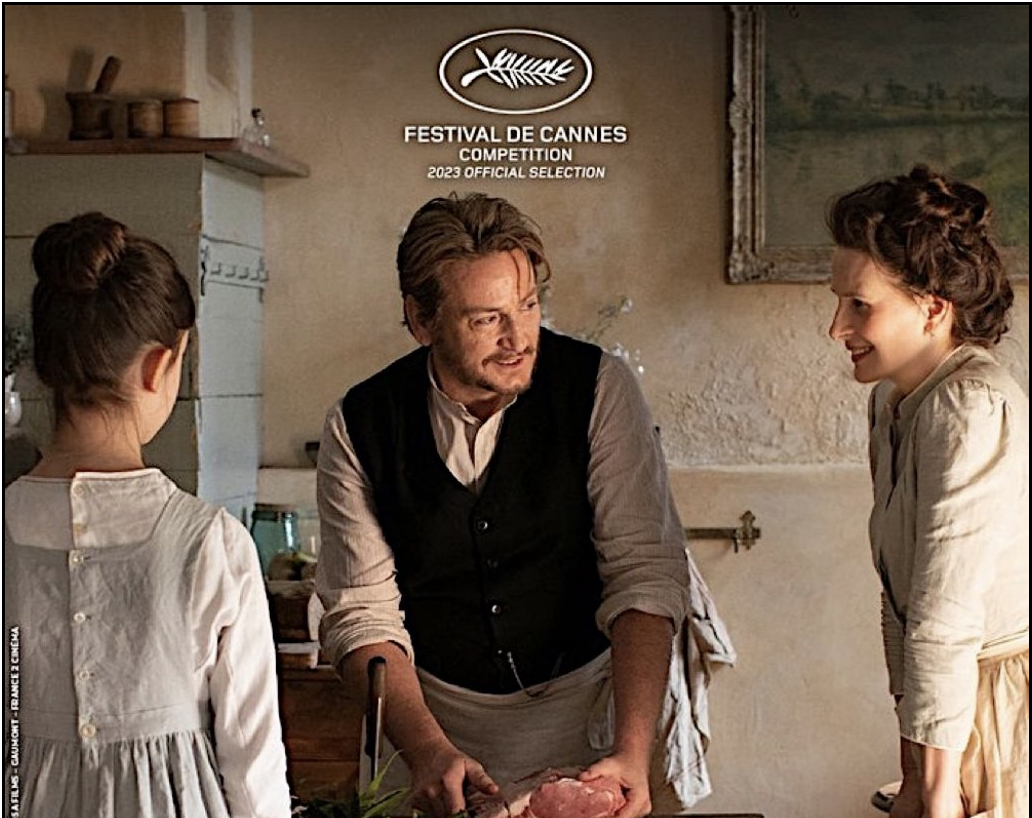
Tran Anh Hung‘s The Pot au Feu (aka La Passion de Dodin Bouffant) is the Palme d’Or grand slam I’ve been hoping to see for the last eight days or so.

The director of The Scent of Green Papaya (’93) has crafted — hands down, no question — the greatest foodie love story of the 21st Century. And it’s certainly among the most transporting films about the necessary love, worship and spirituality that has radiated from every high-end foodie film of the previous century — Babette’s Feast, Tampopo, Chocolat, Big Night, Mostly Martha, Ratatouille.

No Cannes film has sunk in quite as deeply or as fully or turned the key just so — none has caressed my soul or made me swoon quite like this one.

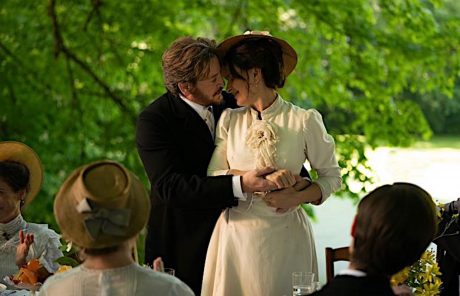
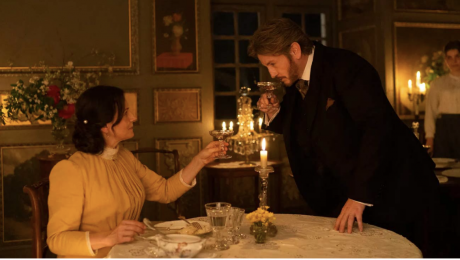
Set in rural France around 1885 and adapted from Marcel Rouff‘s “La Vie et la passion de Dodin-Bouffant,” it’s a longish (135 minutes), meditative, story-light romance about a soothing autumnal blending of souls (Juliette Binoche‘s Eugenie + Benoît Magimel‘s Dodin Bouffant).

Slow to ripen, their romance has been simmering over 20 years of cooking collaboration, and midway through it finally results in the somewhat reluctant Eugenie accepting Dodin’s proposal of marriage. Alas…

Erotic desire is certainly a key ingredient, but their relationship is primarily rooted in the reverential worship of sublime French cooking, and the exacting preparation that goes into it. Exquisite food is a manifestation of love and natural grace that melts the soul and vice vera.

And the whole thing is lovingly captured by dp Jonathan Ricquebourg with alternate use of sunlight and candlelight, and frequently shot inside a large French kitchen warmed by a perfect brick fireplace.

If the Cannes jury doesn’t award The Pot au Feu with the Palme d’Or or at least the second-place Grand Prix…well, it wouldn’t be the first time that a jury has ignored the obvious.

Incredibly and stunningly, I’ve just been told by a fellow journo that he just spoke with a few jackals who hate it and feel it’s among the festival’s worst. There is truly no accounting for taste.

I can only re-emphasize that the God-food-soul aspect (certainly the central current throughout) mixes perfectly with the aging-male-gourmet-adores-brilliant-woman-chef love story, and that the slow pace and lack of a substantive story doesn’t get in the way of anything.

If you’re a little bit older (30-plus) and have the slightest appreciation or respect for the basic elements that go into heavenly cooking (spirit, devotion, discipline), this slow-moving but luscious film will put the hook in and then some. It got my blood going, made my mouth water repeatedly and (should I put it this way?) gave me a foodie stiffie

All great films play by their own rules and pass along universal truths with their own particular playbook. This is what The Pot au Feu manages every which way. It never feels precious or over-sauced or the least bit sentimentalized.

The feeling of restraint is constant and the silences (no music!) are wonderful as Hung and Ricquebourg simply show how various dishes are prepared with immaculate care, especially during an early sequence in which Binoche overseas dish after dish with seemingly divine inspiration.

You can call it food porn and to be fair that’s what it is, but The Pot au Feu is an exceptionally spiritual (you could even call it religious) variation upon a theme. Love stories come in all shapes and sizes.

Ice-Cold Capturing of Evil’s Tidy Banality

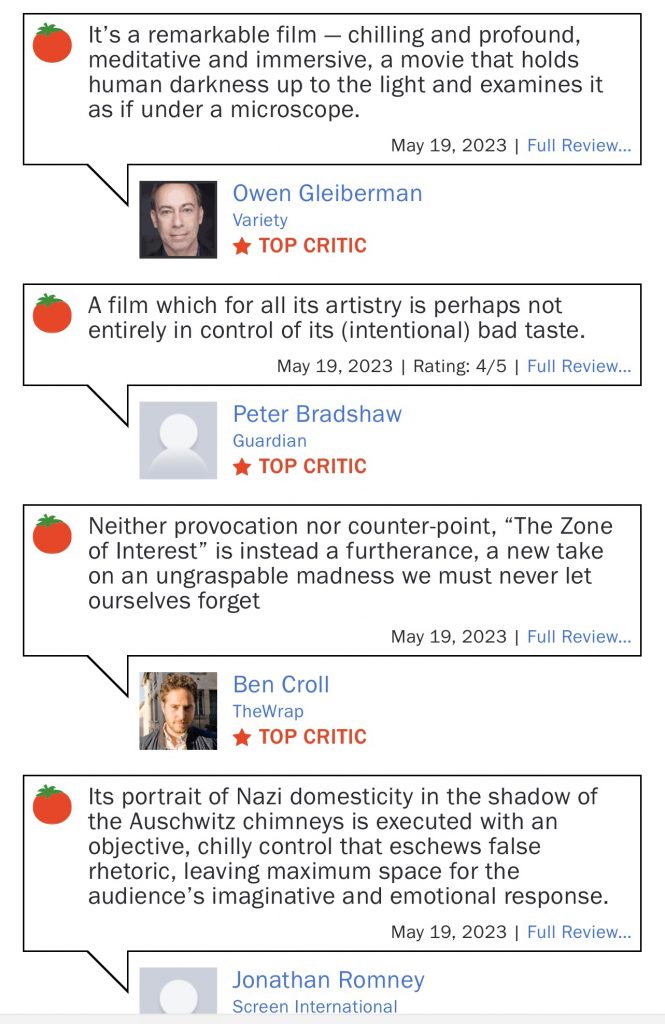
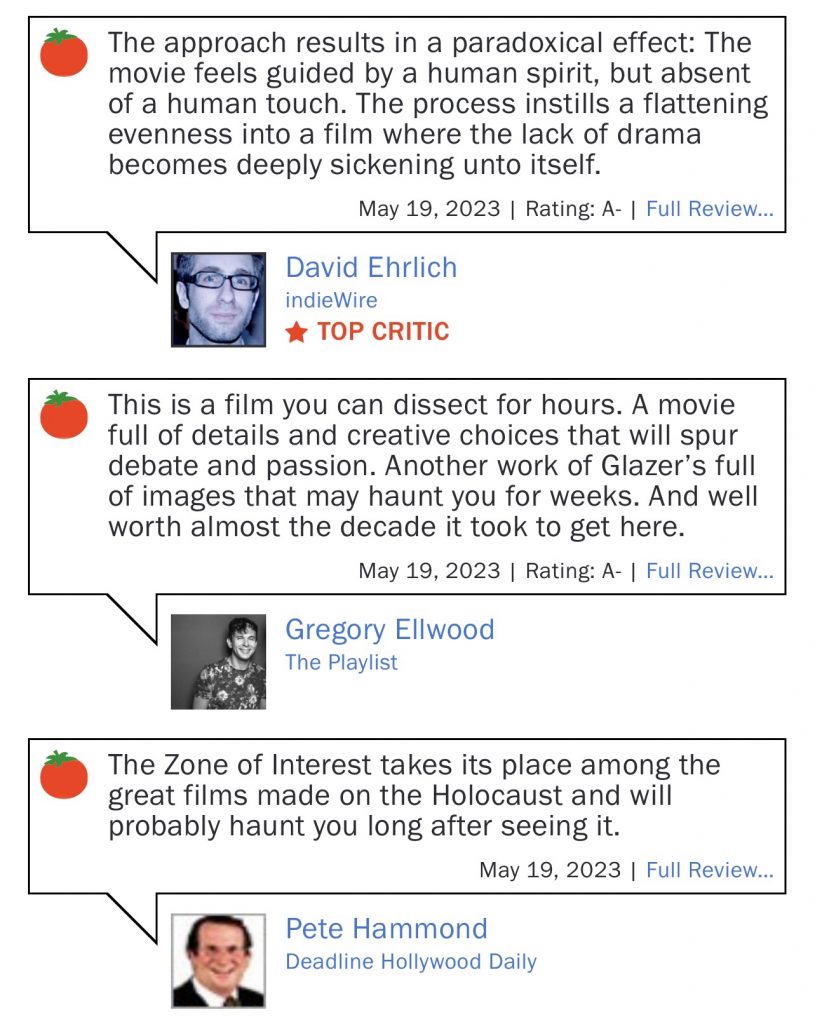
Jonathan Glazer‘s The Zone of Interest is an ice-pick art film about evil with a capital E — a riveting, unmistakably horrifying portrait of the home life of Rudolf Höss (Christian Friedel), commandant of the infamous Auschwitz prison camp during World War II, and his wife Hedwig (Toni Erdmann‘s Sandra Hüller).

Rudolf, Hedwig and the kids reside in a large, handsome home just outside the gates of the camp, and mostly we’re just shown the day-to-day of meals, housekeeping, horseback riding, idle chatting with friends, casual infidelities and whatnot.

Glazer’s basic strategy is to allow subtle allusions, hints and insinuations of the Auschwitz horror to seep into this atmosphere of domesticity. Toward the end are two or three scenes of Rudolf meeting with military colleagues about a planned, ramped-up extermination of Hungarian Jews, but Glazer keeps it all curt and officious, saying to us “can you sense it…can you feel it?”

The vibe is ghastly and revolting, of course. The moral delivery feels like…I don’t know, gas filling your lungs or poison spreading through your veins. Little plop-plops of horror like Alka Seltzer tablets.

The film is basically one static tableau after another. The Hoss family taking a swim, the children playing on the grounds, Rudolf professing love for his favorite horse in the stable, Rudolf and Hedwig indulging themselves with lovers on the side, etc.

The Zone of Interest begins with a spooky overture (the composer is Mica Levi) against a black screen, and to be completely honest it was this overture that put the hook in more than anything else.

Because the movie that follows has no story — it is simply about exposing Rudolf and Hedwig’s aloofness and apartness — cruelty, denial, an absence of basic humanity. Here be monsters.

The second best sequence comes at the very end, a series of flash-forward, present-day images of what I presume is the Auschwitz-Birkenau State Museum, and then Glazer dovetailing back to 1942 as Rudolf is seemingly struck by a vision of what the future will bring, and (perhaps) who and what he is.

It all “works” but man, this film is dry as a bone. Like a frigid, long-buried fossil. Dry-ice steam filling the air.

The Cannes mob, of course, is praising it to the heavens because of the toxic moral current and Glazer’s arthouse strategy. Cannes critics can’t be iffy about such a film — they have to jump up and down lest they seem indifferent or unmoved by what Zone is presenting and how it all sinks in.

It’s a film that certainly sticks to your ribs (I can feel it kicking around inside as I write this), but I have to say that I found it too spare, too artified and rigidly schematic to a fault.

As I watched I was asking myself what is this movie saying that wasn’t in Steven Spielberg‘s Schindler’s List or Loring Mandel‘s Conspiracy (’01), a made-for-TV drama that delved into the psychology behind the 1942 Wannsee Conference, which is where “the final solution of the Jewish question” was ratified and officially put into motion.

The answer, as noted, is that The Zone of Interest has been shorn of explicitness while humming with implication. That’s the basic idea, and either this approach knocks you flat or it doesn’t.

I was simultaneously chilled to the bone while muttering to myself “I wish this film had something more because as penetrating as Glazer’s strategy is, it’s like early haute cuisine…big plate, exquisite food but very small portions.”

The film is based upon Martin Amis’s same-titled 2014 novel. It’s about a Nazi officer named Angelus Thomsen who falls into lust for the wife of the Auschwitz camp commandant, named Paul Doll. The only basic element that the book and the film have in common is the Auschwitz setting.

I’m certainly not dismissing Glazer’s film, but if he’d gone with the Amis story he might have been able to kill two birds with a single stone.

Thumbs Down on “Pearl”

Some are under an impression that Ti West‘s Pearl (A24, currently playing), the X prequel, is some kind of unusual, imaginative gothic slasher film blah blah. And I’ve been told “you really ought to see this.”

Well, I caught it last night, and shame on the above-described. They need to beg for forgiveness, take their shirts off and beat themselves with birch branches, wash their mouths out with soap.

That goes double for a friend who wrote that “while X is a generic slasher flick, Pearl does flesh out some of the X characters. X is X but Pearl is something completely different. I don’t know if you’ll like it or not, at the very least the cinematography is fairly stunning.”

Allow me to ask a question of the Pearl fan clubbers. The question is “what is wrong with you?”

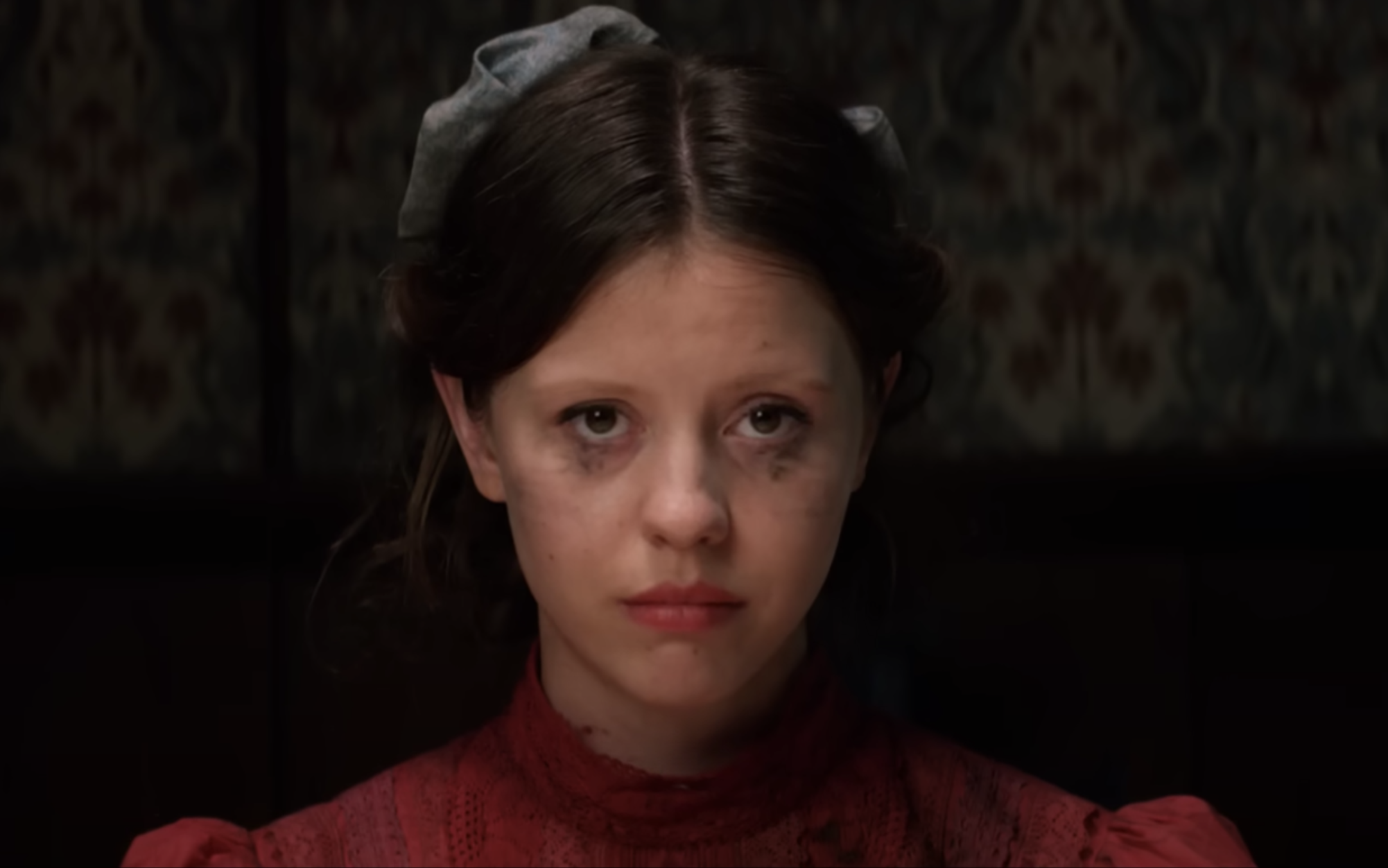
Pearl is a facile, lazily conceived, sloppily written, incongruent American gothic slasher flick that basically asks “what if Dorothy Gale was an enraged, self-hating, mother-hating, animal-hating, everything-hating fiend who uses a three-pronged pitchfork the way Norman Bates used a kitchen carving knife?”

I know what strikingly handsome, wow-level cinematography shot in a wide-open farming locale looks like. Nestor Almendros and Haskell Wexler‘s lensing of Days of Heaven is one example. The bucolic farm images of Pearl (shot in New Zealand, pretending to be Texas) are decent but nothing to get too excited about. Bothersome at times…under-lighted, sometimes muddy compositions. It reminded me of the visual palettes of The Hills Have Eyes, I Spit On Your Grave and The Texas Chainsaw Massacre.

Seriously, fuck this movie.

Random jottings during the screening:

(a) “This is low-rent crap…perverse, brainless, derivative psycho Americana“;
(b) “Pearl’s hard-nosed German mother (Tandi Wright) emphasizes that life is hard and they need to struggle to survive, but she refuses a neighbor’s gift of a stuffed pig?”;
(c) “An alligator living in a lake in Texas?”;
(d) “Mia doesn’t like to be stared at by the brown cow”;
(e) “For my money the cinematography is on the muddy and grainy and under-lighted side”;
(f) “Wright’s performance is pretty good”;
(g) “The 1920s silent stag film was diverting”;
(h) “Masturbating with the scarecrow was okay“;
(i) “The allusion to the 1918 pandemic was interesting”;
(j) “Why doesn’t she chop her father’s hands off with an axe and feed them to the alligator? Why doesn’t she feed herself to the alligator?”;
(k) “Stupid crap…wasting my life watching this shit…feed him to the fake gator!”;
(l) “Where does Pearl get the idea that she’s some kind of good singer or dancer? I know she’s delusional but why go to an audition if she doesn’t have some kind of half-reasonable hope that the audition guys will respond to her skill and talent? That said, the World War I chorus girl sequence isn’t bad”;
(m) “Pearl pitchforks the only nice, sensible guy in the whole film because he begins to realize she’s a bit of wacko, which of course she is”;
(n) “I’m soooo glad I never saw X. I’m ecstatic that I missed it.”
(o) “Ti West is an animal…a serious primitive…the polar opposite of a filmmaker like, say, Todd Field.”

Emily’s Journey

It only took me five weeks to finally watch John Patton Ford‘s Emily The Criminal, which is pretty close to being as good as I’ve been told. It’s not crazy-holy-shit good but good-good, and there’s nothing wrong with that. It’s basically a realistic and wholly unpretentious small-time crime film…no muss or fuss and down to business. But it’s only moderately involving at first. It takes a while to get there.

Aubrey Plaza is suitably fierce and guarded in the title role, a debt-ridden 30something in Los Angeles who gets involved with a phony-credit-card ring. At 93 minutes Emily takes a good 45 or 50 to really put the hook in and get moving, but the last 35 to 40 minutes are quite exceptional.

An expert actress who always invites you in and tells you what’s up, Plaza delivers a pro job as Emily. I really loved her moments in which she was angry and alarmed, and especially a “cut the bullshit” job interview scene with Gina Gershon.

Plaza is one of the producers (along with Tyler Davidson and Drew Sykes) but you know who’s also quite arresting and compelling? Theo Rossi, who plays Youcef, Emily’s mentor-in-crime and later her lover. I’d never paid attention to this guy before, but I will from here on. There’s one moment towards the end when Rossi disappointed me, or his character did rather. I won’t get into it but you have to watch your back.

Emily’s arc is what makes the film fascinating — she starts out as an almost listless, half-invested scammer who’s basically an in-and-outer, but the more criminality takes over her life the stronger and tougher she becomes. By the end she’s almost become a version of Neil McAuley or Michael Corleone at the end of The Godfather. The film basically says “theft and criminality is its own buzz, but you have to become a kind of fierce animal to really survive in this realm…you have to convince others that you’re scary when crossed so they’d netter not fuck with you.”

One reason I didn’t get to Emily before last night was that it’s still not streaming. I’m sorry but it didn’t strike me as worth $18 or $20 plus popcorn and whatnot, and it’s not like it’s playing in a lot of theatres.

Read more

Once More With “Empire”

Yesterday I tried to elaborate upon my positive Telluride reaction to Sam MendesEmpire of Light (Searchlight, 12.9).  Toward the end of the comment thread Rosso Veneziano replied as follows:  “I respect your take but the general consensus is that the movie is bad. 58 on Metacritic, 47% on Rotten Tomatoes…and that means rotten. It’s not just critics at Telluride — the TIFF reviews were even worse.”

HE response:  You first have to remember that many if not most of the critical elite are not standing on the same terra firma as the rest of us.  In more ways than one they’re living on their own frilly planet.  Every consensus opinion that emanates from this bunch has to be filtered through this basic reality.  Most of them are not of this earth.

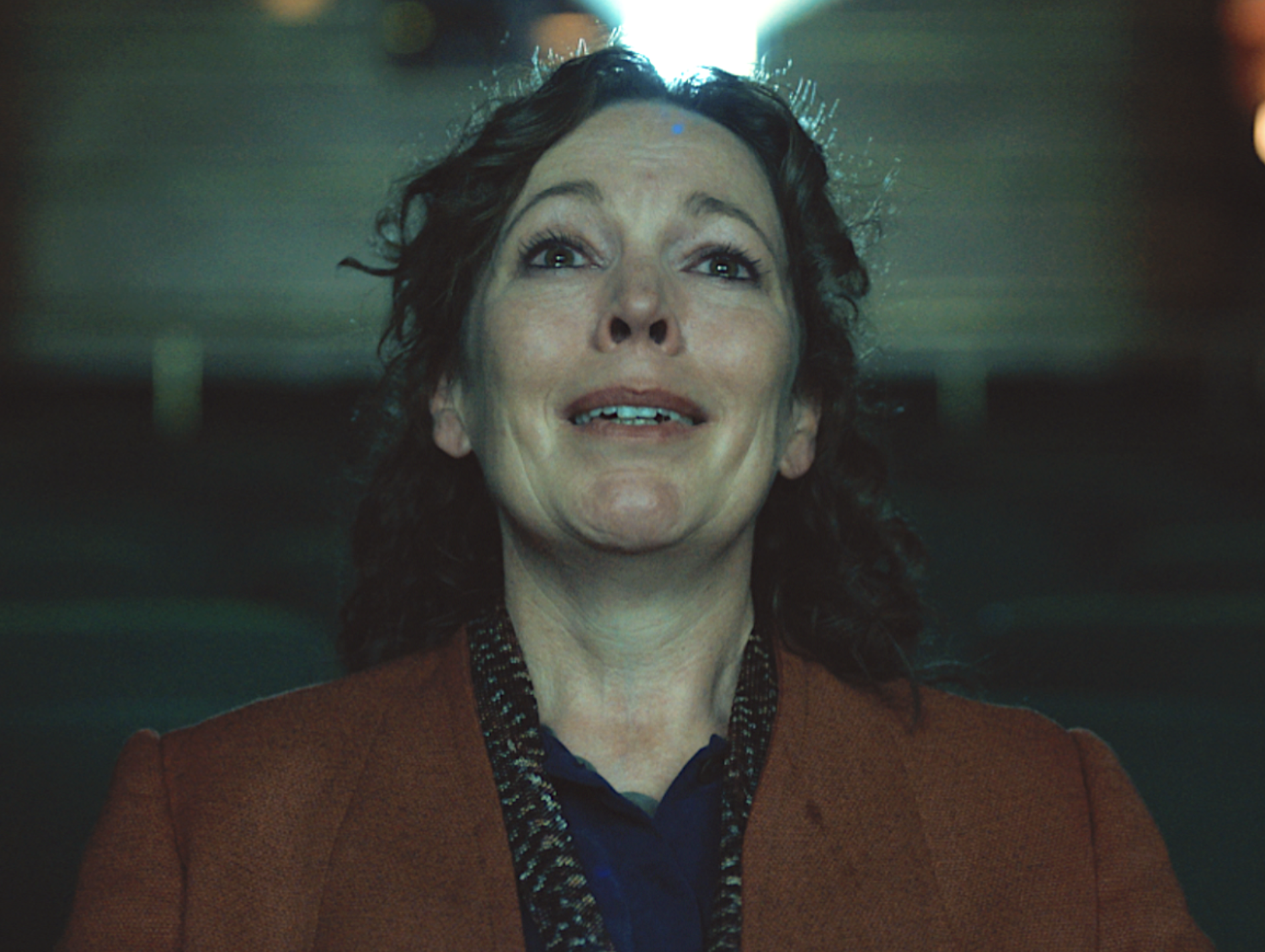
Trust me — they’re dismissing Empire of Light because they’re unable to buy the curious but ultimately poignant romantic bond between the two leads, played by Michael Ward and Olivia Colman.  (If Ward’s Stephen character was played by a non-POC, the reactions would be quite different.)  I myself was skeptical of this dynamic going in, but the fine writing, acting and overall period swoon effect, which is partly if not largely due to excellent production design plus Roger Deakins‘ handsome cinematography…all of this won me over.

Filmmakers are generally required to depict POCs with a paintbrush of presentism these days (i.e., presenting them according to contemporary sensibilities), and many critics, knowing this, will get all riled when a Black character is presented “incorrectly” within a period film. Many elite critics see themselves as white-knight figures whose task is to bestow dignity or even majesty upon characters of color.

Ward’s performance will never be criticized, of course, but there’s no dodging the fact that he’s a handsome actor of considerable poise and charisma playing a decades-old period character in a film written and directed by an older white man. (Not unlike Mahershala Ali in Green Book.)

And there’s a fascinating violent moment in this film, by the way, that I haven’t mentioned. Racist skinhead goons are lurking on the fringes of this story, and early on a few of them are taunting Stephen on a sidewalk, and one strikes him with a head slap. And what does Stephen do? He does the smart thing by ignoring the attacker as he continues to walk away. He knows these animals are looking for an excuse to beat him senseless, and he doesn’t give them that.

A violent moment such as this runs against the presentism aesthetic. A Black man of today would never ignore or cower from an attack of this nature if it was depicted in a present-tense film.  Our post-George Floyd mythology demands a greater measure of defiance and dignity.  And yet Mendes, adhering to the ugly reality of things in rural 1980 England as much as Paul Thomas Anderson’s Licorice Pizza was truthfully immersed in the Los Angeles culture of the ‘70s, does the stand-up thing.  I know that the instant I noticed Stephen’s reaction to the head slap, I went “wow…that’s unusual but then again that’s Mendes.”

Feeling Larson’s Pain

I gradually came to respect Lin Manuel Miranda‘s Tick Tick…Boom (Netflix, now streaming). I was even emotionally affected by it in the second half, but man, what a struggle. Mine, I mean.

Based on Larson’s 1990 stage musical of the same name, it’s about Larson himself (Andrew Garfield) struggling and feeling desperate and anxious and needing so hard to get his material produced and seen…to get up and over…he constantly sweats and strains and feels awful about not being a success at age 30, and the movie puts you right into the misery pit with the poor guy, and it’s no picnic, let me tell you.

Tick, Tick…Boom is a “musical based on a musical about writing a musical”, and I’m telling you that the first 20 or 25 minutes of this film, directed by Lin Manuel Miranda, will make you go “oh, no…please, no.” I was in agony. Garfield is pushing so hard, turning on the “charm” and emphatic personality, singing with a not-great singing voice, so much “sell” in his performance…buh-bo-buh-bo-bo!

Art isn’t easy, but watching a poor, exhausted, stressed-out guy trying to make good art isn’t easy either.

But after 30 or 40 minutes of torture I began to settle into the story and I began to feel and even identify with Larson’s pain. I’ve been there. In ’78 and ’79 I was poor as a churchmouse and living in a Soho cockroach flat and trying to get rolling as a movie critic and interviewer, and my theme song was Gerry Rafferty‘s “Baker Street.” (“And you’re cryin’, you’re cryin’ now”) I know all about that agony and fear and desperation so don’t tell me.

Incidentally “Baker Street” is a much catchier and more arresting tune than anything in Larson’s Tick Tick score. Sorry.

Friendo to HE: “I hate all of the people in this thing. People don’t talk like this in real life. It’s very 2021. They’re all talking in woke-speak. It’s the modern left’s idea of the perfect sensitive person movie, Except nobody will give a single shit about it.”

HE to Friendo: “I groaned when Susan, his LatinX-woman of color girlfriend (Alexandra Shipp), left him because he’s too consumed in his work. Earth to Susan: All creatively-driven types are consumed by their work. It goes with the territory. The real loves of Larson’s life were, of course, his music and Stephen Sondheim.

Friendo to HE: “I felt badly for his plight but this script is just terrible.”

HE to Friendo: “And for all of it, we don’t get the grand payoff that is Larson’s Rent….Rent is years away when the film ends. I took Jett with me to see Rent at the Nederlander when he was eight or thereabouts, and he wasn’t a fan.”

Read more

And Away We Go…

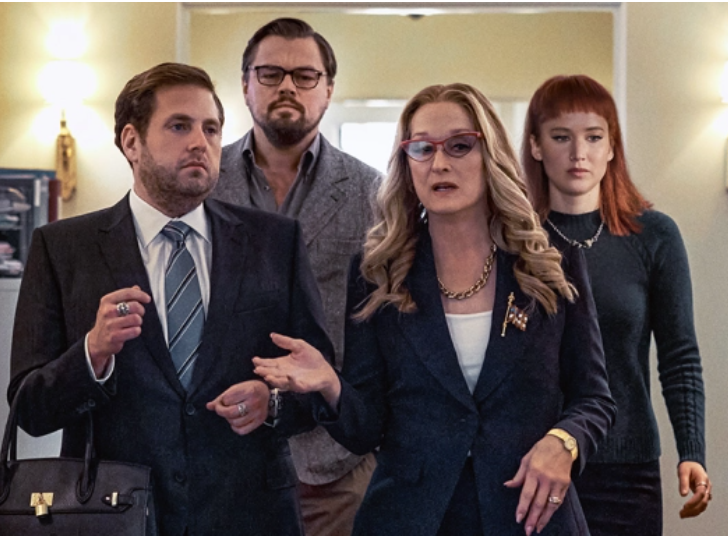
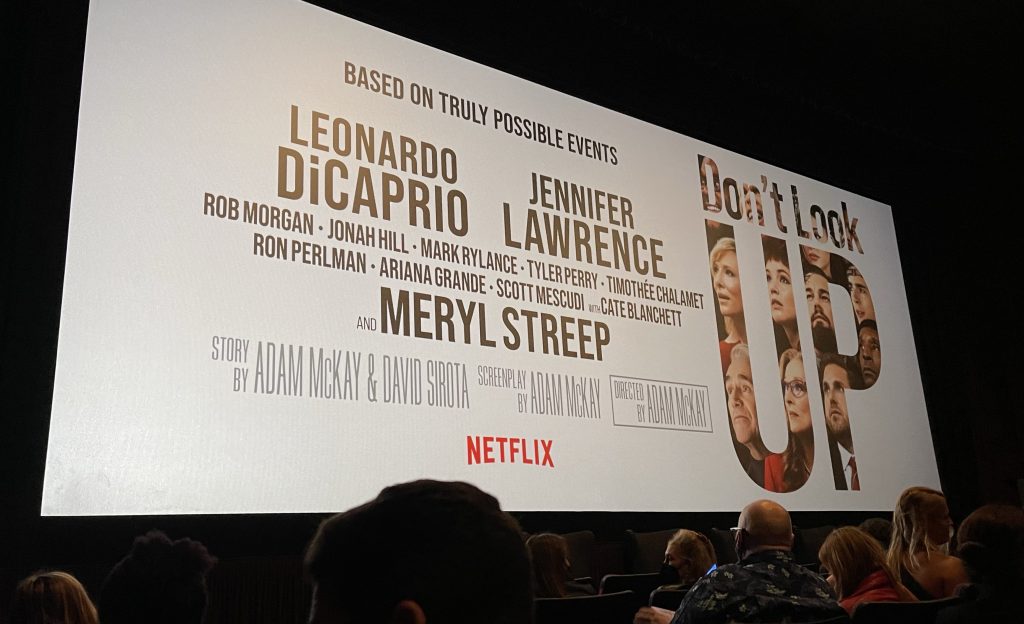
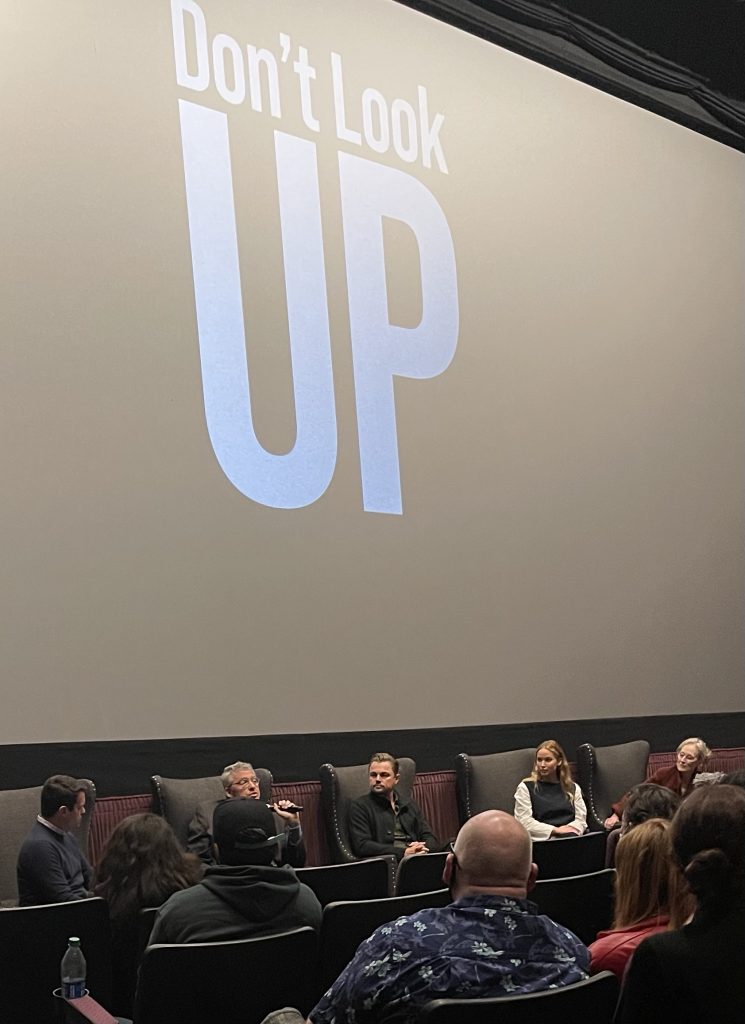
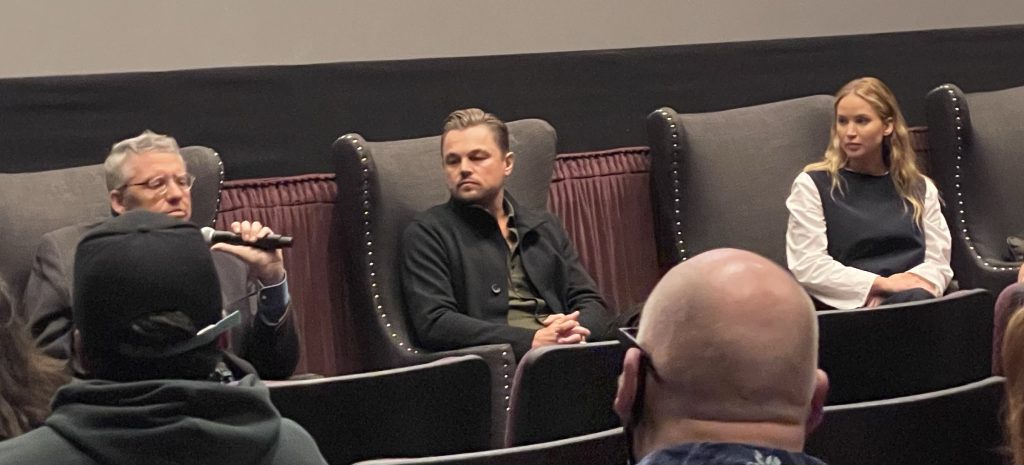
9:30 pm: A for vision, A for speaking comic truth, A for Leonardo DiCaprio’s explosive acting in two temper-tantrum scenes and….uhm, somewhere between a B-minus and a C-plus for execution.

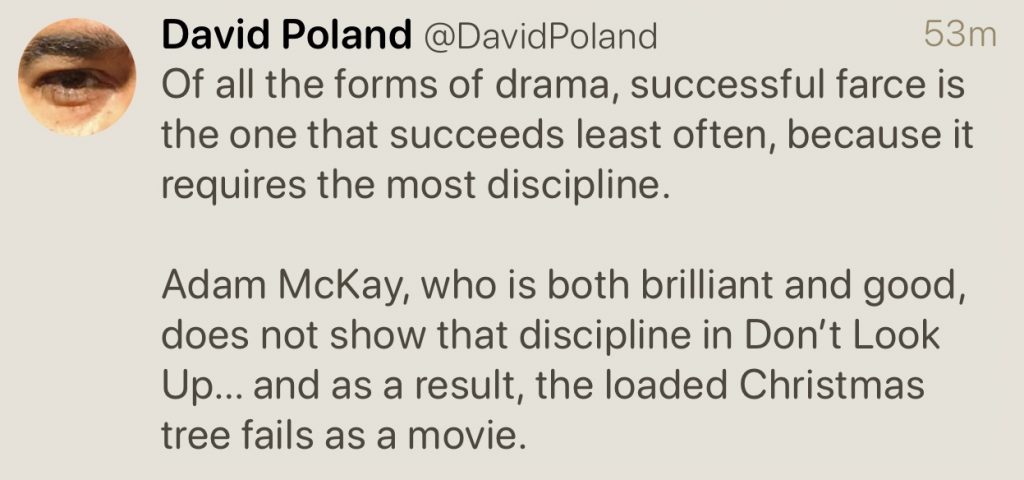
Very ballsy and bold Strangelove-like satire that feels like an extended, gargantuan, improv-y, effects-laden SNL super-skit about massive self-delusion & self-destruction, and yet oddly inert in certain portions. But not entirely.

Because at the same time it’s really out there and righteously wackazoid, and it works now and then.

A crazy-ass Covid and climate-change comic allegory, for sure. It says the right things, totally eviscerates the right and especially the dumbfuck denialists.

It hits the mark a few times, and as broad apocalyptic satires go, you certainly can’t say it doesn’t swing for the fences. Leo really nails it in two screaming scenes (as noted), and it ends with a kind of hand-holding family whimper scene that I responded to.

I can’t in all good conscience say it’s “Casey at the Bat” because it’s really, REALLY saying the right & necessary things, and I loved it for that. But it felt strangely off in a way that I found head-scratchy. But (yes, I’m repeating myself) I loved what it was saying. Call it a ground-rule double with issues.

That said…

Limp “Rifkin” Against Scenic Backdrop

Last night I streamed Woody Allen‘s Rifkin’s Festival, and I’m afraid I can only echo what critics who caught it during last September’s San Sebastian Film Festival said in unison — it’s a bowl of mild, occasionally prickly porridge that’s simply not good enough. I wouldn’t call it a waste of time, but it certainly won’t enrich anyone’s appreciation or contemplation of their all-too-brief time on this planet. And that’s too bad.

Shot in the summer of ’19 against a simulation of the San Sebastian Film Festival (which actually happens in September), it’s a pallid, lamenting, ummistakably dreary sitcom about being cuckolded while shuffling along with a septugenarian sourpuss attitude. It putters and schmutters with occasional dreamscape tributes to classic ’60s cinema (Fellini’s 8 1/2, Truffaut’s Jules and Jim, Bunuel’s The Exterminating Angel, Bergman’s Persona and The Seventh Seal), which fit into the milieu, of course, but in a decidedly tired, “no longer part of the world” way. The film never bores but never really turns on the current. And I’m sorry for that.

It’s about Mort Rifkin (Wallace Shawn), a crabby 70something Jewish gnome from Manhattan who used to teach film, and his having accompanied Sue (Gina Gershon), his fetching 40something film publicist wife, to the festival, and how he immediately senses a current between Sue and her top client, a younger, mildly pretentious director named Philippe (Louis Garrel).

Rather than skulking around and seething with suspicion, fortune smiles when Mort visits a beautiful 30-something doctor named Jo (Elena Anaya) and promptly falls head over heels. No, Mort doesn’t make any overt moves (thank God!), but he does get involved in her turbulent marriage to a tempestuous artist Paco (Sergi López, whom I haven’t laid eyes on for a good decade or so). Mort talks to Jo (and to the audience) about working on an ambitious novel, but if you haven’t written your big novel by age 77 you should probably hang it up.

Vittorio Storaro‘s cinematography constantly glows. Every shot of San Sebastian is luscious and inviting.

After seeing the Rifkin’s Festival trailer last September I wrote that casting Wallace Shawn as a dismayed romantic protagonist is not what anyone would call audience-friendly. Shawn is pushing 80, for God’s sake, and the size of a Hobbit. By any semi-realistic biological standard he’s “out of the game.” It would be one thing if, say, Allen had cast the 75-year-old Steve Martin as a WASPy version of Mort. But it’s completely impossible to accept a bald Bilbo Baggins as a hormonal stand-in, and especially one who walks around with his mouth half open all the time. It was difficult enough to accept Shawn as Diane Heaton‘s ex-lover in Manhattan, and that was during the Carter administration.

I wrote that Shawn’s character “would naturally feel wounded and disoriented by Gershon’s temporary infidelity, but it’s all but impossible to relate to him in this context. My first reaction was that this is like John Huston casting Lionel Barrymore in the Humphrey Bogart role in Key Largo.”

I’ve been saying this for years, but if the 84 year-old Allen intends to keep churning them out he needs to work with a younger writing partner — some 40something whippersnapper who could punch up the material and lend a certain 21st Century edge. There’s nothing diminishing about such a scenario. Allen worked with Marshall Brickman on Annie Hall, after all, and with Douglas McGrath on Bullets Over Broadway.

Read more

King Vidor’s “The Crowd”

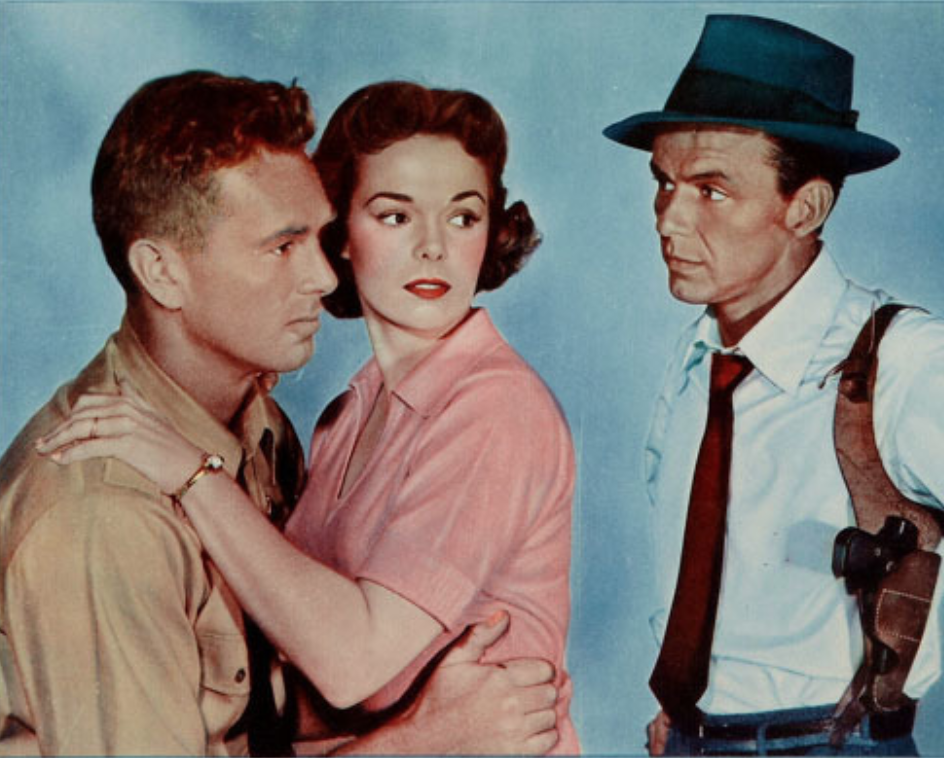
Lewis Allen and Richard Sale‘s Suddenly (’54), a thriller about an attempted Presidential assassination, runs only 82 minutes with credits — a very tight ship.

Frank Sinatra plays John Baron, possibly the most talkative and emotionally exposed psycho hitman in movie history. His best moment is a confessional speech that begins around 50:25…a bit that ends with Sinatra walking right up close to the camera lens and staring straight into the audience. (Here it is.) His death scene is great also; he’s almost weeping as he whimpers “no…no,” dejected and heartbroken. John Hurt‘s Caligula died the same way in I, Claudius.

Sterling Hayden to yours truly, sometime in late ’78: “We shot it in early ’54. before Sinatra won the Oscar for From Here To Eternity. So during filming he was still ‘down’ in a sense. But he still had the old kezazz.”

Full Ferrara

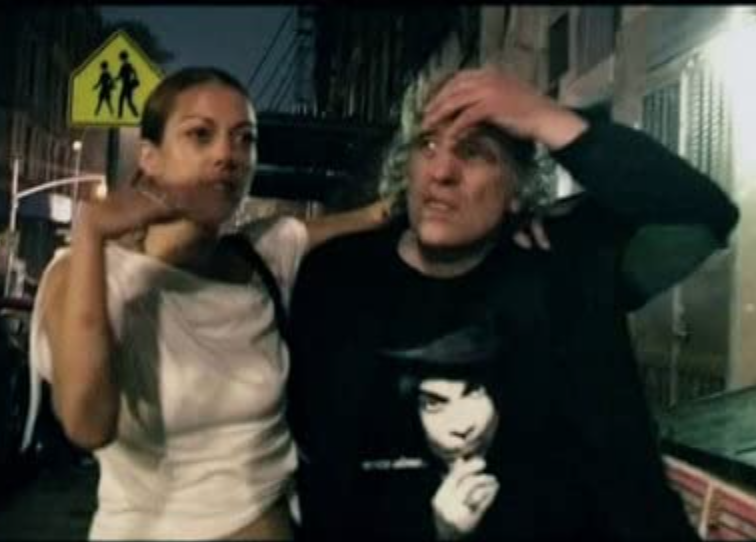
It’s been 17 years since I last saw Rafi PittsAbel Ferrara: Not Guilty. The kids and I caught it at the 2003 Locarno Film Festival. Six years ago a trailer popped up. The film also appeared on YouTube that year, but I somehow missed that fact. Anyway, here it is — shot in ’03, 117 minutes, worth a looksee.

Not Guilty doesn’t attempt an in-depth probing of Ferrara’s career and aesthetics by the usual means — searching questions put to the director, a comprehensive array of clips, talking heads offering insightful assessments, etc. Pitts just follows Ferrara around New York — shooting the shit, filming some kind of music video, visiting and hosting friends, talking to women on the street, tossing off anecdotes about Harvey Keitel, Christopher Walken and Willem Dafoe (the stars of Ferrara’s Bad Lieutenant, King of New York and New Rose Hotel) — and lets him be himself.

“‘I knew that an interview situation wasn’t going to give us any new information about Abel,’ Pitts told the Pardo News, the local festival rag. ‘The best thing was to show him how he is. The film is always from his point of view. He’s always in the shot.’ And it’s a cool ride. A wonderfully messy, slipshod, organically alive New York runaround.

“The festival program notes on this film describe Ferrara as ‘deranged,’ which I think is a little harsh. He comes off as a nutter, all right, but one deserving of respect. What comes through is a portrait of an anarchic creative teenager with the soul and finesse of a 51 year-old.

“A gnomish, stooped-over figure with longish graying hair in a leather jacket and a pink New York Yankees baseball cap, Ferrara is full of hyper, rambunctious energy. He plays guitar and piano (not too badly) and he loves to tell stories in one of those fuck-this, fuck-that Manhattan voices we’re all familiar with.

“An actor friend observes at one point Ferrara tends to do four or five things at the same time, and each one with distinction. It’s clear he likes to solve creative problems by immersing himself in chaos and sorting things out as he goes along.

“It’s also clear he knows from movies, and precisely what’s good and what’s not. He’s goes into a kind of frenzy when he’s working, and you can see why certain films of his (Bad Lieutenant and King of New York, certainly) work as well as they do and why, at the same time, constipated producer types might feel a little intimidated by him.

“But he’s great with actors and catching excitement on the fly. Bronx-born and quick with a quip, Ferrara loves taking cabs all over town and talking shit with people he runs into. There’s a great moment when he spots a long-legged brunette walking nearby and starts walking after her, making cracks like ‘tall…and that’s not all!’ and ‘those boots were made for walkin’!’

Read more