“Cold Case” Approaching

Park City posting on 1.29.19: “Mads Brugger‘s Cold Case Hammarskjöld (Magnolia, 8.16) is one of the most original-feeling investigative docs I’ve ever seen.

“It begins as an investigation into the 1961 plane-crash death of UN General Secretary Dag Hammarskjöld, which happened, we gradually learn, at the hands of colonialist bad guys. The film is about how Brugger, who casts himself as a kind of whimsical, not-quite-Hercule-Poirot-level investigator, and colleague Goran Bjorkdahl gradually uncover what happened.”

Cold Case Hammarskjöld “represents a sideways shuffle approach to discovering long-buried bones and nightmares. It is, in fact, an eccentric film, and yet the things it discovers are real and beyond ugly. It’s the mixture of curious whimsy and malevolent apartheid schemings that gives Cold Case Hammarskjöld a tone of spooky weirdness.

“Suffice that Brugger comes to believe (and in fact persuades) that Hammarskjold’s plane was shot down by Belgian-British mercenary pilot Jan van Risseghem, who was apparently doing the bidding of some ugly fellow who were angered by Hammarskjöld’s sympathy for African nativist independence movements.” — posted from Park City on 1.29.19.

She Who Gets Slapped

Meryl Streep to Nicole Kidman: “Whadaya call that? Foreplay?”

Later: “I’m worried about the boys. Because you seem unwell, erratic. You hit me. You snapped. I think you need to take some real time to heal, and while you do that, I think Max and Josh should reside with me. You’re a mess, Celeste. And until you’re better, we need to think about protecting the well-being of our boys. They’re at risk here. They’re at risk in your care.”

Although Streep’s Mary Louise character is being presented as a needling, malevolent presence (which she is as far as the fate of the “Monterey Five” is concerned), she’s the only character on Big Little Lies whose company I enjoy.

Del Amo Effect

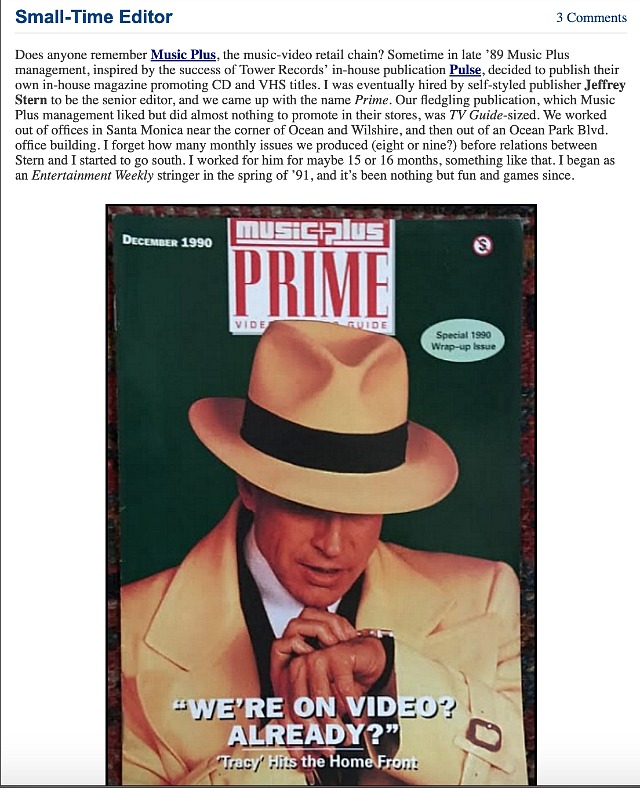
Between late ’89 and early ’91 I was senior editor of Prime, a Music Plus-founded monthly that promoted CD and VHS titles. In early ’90 we decided we needed an art director for our TV Guide-sized publication. I interviewed six or seven people. My favorite applicant was a youngish, dark-haired, prim-looking woman whose name escapes. I “liked” her graphic design samples — not brilliant but they had a certain elan and consistency. She looked a bit like Tulsi Gabbard does now. Not a top-tier X-factor creative, in my view, but what could I expect given the modest salary we were offering?

I told my boss, Jeffrey Stern, and an assistant editor, Jake Stihl, that she seemed like the best of the lot. Having reviewed her “book” and resume and sized her up to a certain degree, they told me they agreed. All signs favoring. But a day or two later I had a follow-up phoner with Tulsi, and she told me she lived directly opposite the Del Amo Fashion Center in Torrance.

That jolted me some. I thought about it again after we hung up. I couldn’t get Del Amo out of my head. The next day I decided that Tulsi wasn’t a good fit. Stern and Stihl, taken aback if not open-mouthed, asked why. I knew my reasoning would sound odd to them, but I did my best:

“Because a person who really believes in creativity, which is to say someone living a little bit on the edge and always looking for inspiration of whatever sort, be it atmospheric or cultural or spiritual…a person who’s seriously invested in some kind of artistic pursuit and wants to be in a good position to pick up signals about whatever the next thing might be…that person would never live opposite the Del Amo Shopping Center,” I said.

“Jeff…c’mon,” Stern said. “Her stuff is good.”

“Hear me out,” I replied. “I like Tulsi and recognize that she’s at least moderately talented, but it really bothers me that she chose to live in what I feel is a toxic environment. Deliberately. The vibes that come out of Del Amo are oppressively bland. Mega-malls inspire passivity. They’re about trying to lull people into a state of submission in the same way that Las Vegas, Cancun and Disneyland do.

“It would be one thing if Tulsi lived a mile or so from Del Amo…fine. But directly opposite it? Graphic artists worth their salt live near the beach or in Koreatown or Silver Lake or Studio City or Venice or Burbank or Van Nuys…any one of dozens of Los Angeles towns wouldn’t prompt a raised eyebrow in this context. And yet Tulsi chose to inhale those Del Amo vibes on 24-7 basis, and that tells me that on some level that her ideas will be less than they should or could be.

“I’m sorry but something in my gut is genuinely unsettled about this. I would honestly feel better about hiring her if she was homeless and living in her van. To me Del Amo is poison.”

This was eight years before Quentin Tarantino‘s Jackie Brown, of course. That 1998 film lent a vague aura of mock-ironic coolness upon Del Amo, I guess. Maybe I’m just projecting.

16% POC Membership Ain’t Hay

Of the 842 new members invited to join the Academy of Motion Picture Arts and Sciences, half are women and 29% are people of color. The Academy has thereby doubled the percentage of nonwhite members over the last four years. In 2015, people of color accounted for 8% of Academy members. In 2019, that percentage has doubled. As it stands, the Academy counts 8,946 active members. The total membership including retired members is 9,794.

Quality, Not Quantity

In a view from a spring research screening, it is claimed that Marielle Heller‘s A Beautiful Day in the Neighborhood (Sony, 11.22) “works when it focuses on Tom Hanks as Fred Rogers. He’s undeniably charming and infectiously heartwarming as the TV icon. He nails the spirit and voice of Rogers, and the physical resemblance is close enough.”

Not a surprising opinion as pretty much everyone agreed that Hanks was perfectly cast, and that inhabiting Rogers wouldn’t involve much of a stretch.

The viewer also asserts, however, that Hanks’ performance “will be regarded as supporting since he’s absent throughout the majority of the third act, due to a focus on Matthew Rhys‘ journalist character and his relationship with his dying dad.”

Be that as it may, a lead actor is rarely defined by his/her amount of screen time , but the degree to which he/she dominates the narrative. Remember that Anthony Hopkins‘ Best Actor Oscar for The Silence of the Lambs resulted from only 16 minutes of screen time.

“Either way, Hanks could finally be looking at his first Oscar nomination in almost 20 years,” the guy goes on. “The film is emotional and could be in the running for a Best Picture nomination if there are no issues over the size of the Rogers role. I’d also keep an eye on Marielle Heller for Best Director. Her direction keeps the movie enchanting even when the script runs into some dicey passages, and it’s time for another female director nomination.”

Ample Cash On Hand

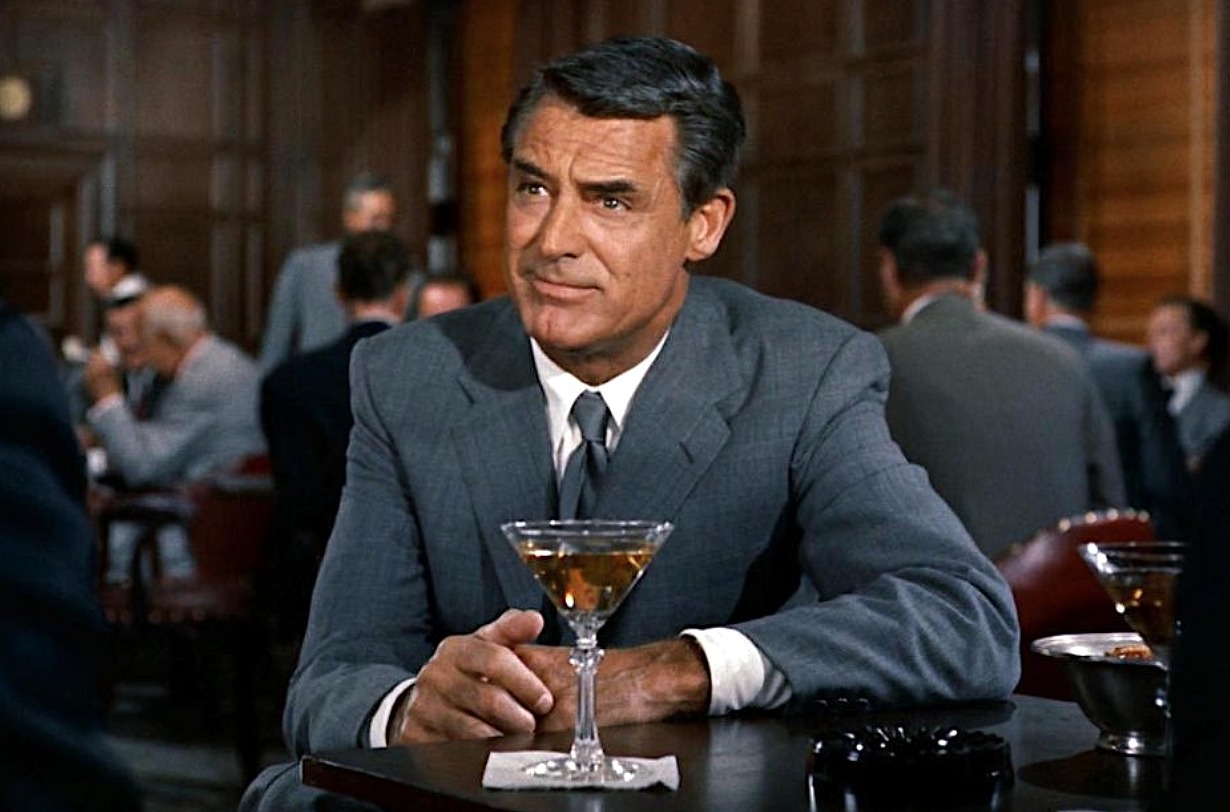
In North by Northwest Cary Grant‘s Roger Thornhill drops a lot of cash on a lot of random expenses — cabs, beverages, tips, bus tickets, dry cleaning. I’ve calculated that he spends a minimum of $275, which comes to roughly $2390 in the 2019 economy. That’s a lot to be carrying around. The film was shot in the summer of ’58, when the only credit card was Diner’s Club and no one had ever heard of debit cards. Thornhill, on the run for murder and unable to just stroll into his local bank for a withdrawal, had to pay for everything with pocket cash.

[Click through to full story on HE-plus]

Golden Boy

In some ways Silvio Berlusconi was the Italian Donald Trump — fat, corrupt, arrogant. Except the ten-years-older Berlusconi (who’s now serving in the Italian Parliament) has a lot more dough. The former Prime Minister of Italy (three separate terms, nine years in total) owns Mediaset, the largest broadcasting company in that country. Berlusconi’s terms as Prime Minister service were plagued by conflicts of interests, sex scandals and a generally intemperate performance marked by poor judgment.

I’ve been hearing for well over a year that Paolo Sorrentino‘s Loro (Sundance Selects, 9.20) doesn’t work, that it suffocates in its own excess and delirium. But the trailer seems diverting enough — eye-candy avoiding the soulful at all costs.

In Italy Loro was released as two separate features or “acts”: Loro 1 (4.24.18, 100 minutes) and Loro 2 (5.10.18, ditto). The British version and the one that will open stateside in September is a single entity that will run 145 minutes (or something in that vicinity).

The Rotten Tomatoes rating is 83 with an audience score of 54%.

Read more

“NXNW” Projection Booth Trauma

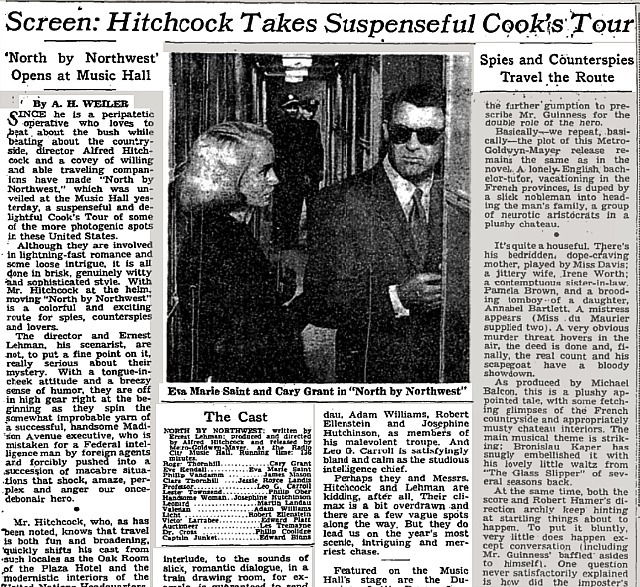
Tomorrow (7.1.19) is the 60th anniversary of the opening of Alfred Hitchcock‘s North by Northwest, which premiered on 7.1.59 in Chicago, and on 8.7.59 at NYC’s Radio City Music Hall. Which was never, by the way, the greatest place to see a film — too cavernous, echo-y sound, too long a “throw.”

The anniversary prods a recollection — a NXNW-related incident that happened 38 or 39 years ago. A titanic projection error plus management failing to respond in a timely manner led to a general over-reaction. I was partly to blame.

[Click through to full story on HE-plus]

Nightmare Demon Logic, No Story To Speak Of

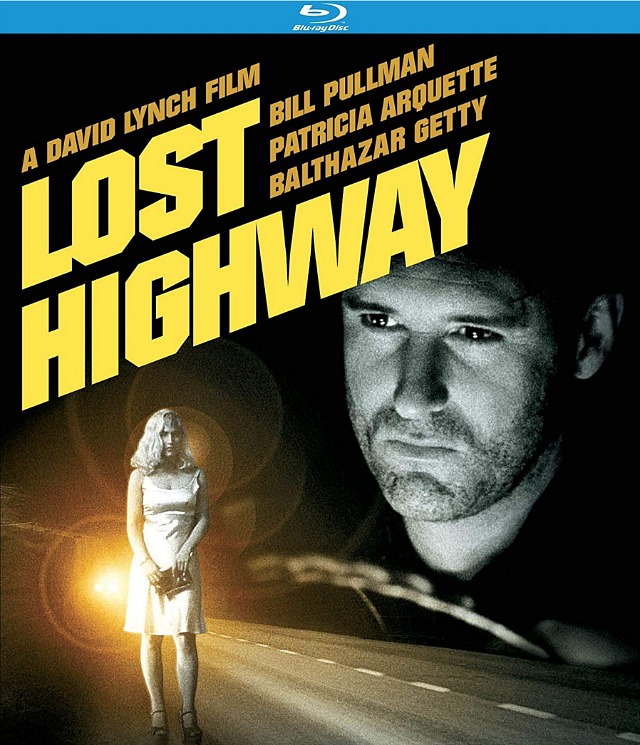
Excerpt from review of Kino Lorber’s Lost Highway Bluray, posted by DVD Beaver’s Gary W. Tooze: “Having lamented that this Bluray is not from the original camera negative, director David Lynch has disavowed this release. Kino requested David’s involvement in preparing the Bluray, [but] for whatever reason, the collaboration didn’t transpire and Kino has released this Bluray edition.

“How does it look? Solid. Even if not from the original camera negative, it looks superior to the 2010 mk2 Bluray out of France. I prefer the colors (warmer flesh tones, earthier hues), it is authentically darker, shows more information in the frame, etc. It’s the best this film ever has ever looked on my system.”

Kino Lorber statement: “We reached out to Mr. Lynch via email to oversee and color grade a new 4K transfer (from the original camera negative) and get his approval on the dozen or so extras we had planned to include. Once we knew he was not interested in working with us, we had no choice but to go ahead with the current Universal master and the few extras we had already produced and acquired.

“To our surprise, the master in question was a very good one, so we were happy to release it with some extras. We found out later that the extras and packaging also had to be approved by him (not the norm) and we sent email after email without one response.

“We delayed the release by a month, hoping we could at least get him to approve the trailer, the essay and our packaging. At this point we knew the interview and commentary were not possible, but after a few more weeks we dropped the essay, the trailer and changed our front art to the previously approved DVD art. The BD only includes the film on a dual-layered BD50 disc, maxing out the feature at 30mbps with 5.1 surround and 2.0 lossless audio. We were planning to take the high road and not play the blame game, but after his tweet this weekend, we felt like we had to respond.

“We’re still huge David Lynch fans and are proud to release one of his masterpieces on Bluray.”

“If Not For The Wonders of Technology…”

I ran into Stuber costar Kumail Nanjiani (accompanied by wife and Big Sick co-writer Emily Gordon) at last Monday’s Midsommar screening. As an ice-breaker I said I was somewhat depressed by a story Nanjiani shared with N.Y. Times “Carpetbagger” Kyle Buchanan, the one about a friend casually proving that 20somethings don’t watch movies as a rule, and at best incidentally.

We’d last spoken at a Santa Barbara Film Festival party, although neither of us could remember that particular detail at the moment. Nanjiani is cool, casual, unpretentious. HE hereby conveys a stamp of “bruh” approval.

Stuber screens in Century City on Tuesday night. Excerpt from Peter Debruge’s 3.14 SXSW review: “One other detail that differentiates Stuber from your average action comedy: The movie embraces the real-world physics of gunplay, car crashes, and hand-to-hand combat –— obviously bent for both dramatic and comedic effect. People die, often and quite brutally, while the characters attempt to pull off tricks they’ve seen in other action movies, but frequently with far different results.”

Read more

11 Minutes, Worth Watching

Don Lemon: “There seems to be this idea that Joe Biden is the strongest candidate [who could] beat Donald Trump. But you actually look at past Democratic candidates who won…Bill Clinton was a fresh face [in ’92]. Barack Obama was a fresh different face. Al Gore, who had been in office a long time, did not win. John Kerry did not win as well. What do you think about this idea that it has to be an older white male who can beat Donald Trump?”

Pete Buttigieg: “The pattern you’ve just described shows that possibly the riskiest thing we could do is to try and play it safe in that way. Think about this. My home state of Indiana went blue once in the last 50 years. And it wasn’t for Bill Clinton or John Kerry or Jimmy Carter. It was for Barack Obama. Now, if we were sitting here in late June of 2007 and saying ‘let’s find somebody so electable, so palatable, so easy for swing voters to get comfortable with that [candidate X] could even carry Indiana for Democrats.’ I’m not sure that a lot of people would have said the name of Barack Obama. But we was able to move people and inspire people.”

Cold, Repellent, Oddly Beautiful

I hadn’t watched A Clockwork Orange for a good five or six years, perhaps seven or eight. Quite a while. So I gave it a go yesterday, and it’s still brilliant, of course — perfectly composed and designed and punctuated to a fare-thee-well. It’s looking, I should add, a bit less for wear by current standards. It looks “okay” but not as sharp or robust as I’d remembered. It’s high time for a fresh 4K remastering as well as an actual 4K disc — why piss around at this stage? I want my Clockwork bump.

Stanley Kubrick‘s 1971 classic remains a chilly, dead-on capturing of Anthony Burgess’s 1962 novel mixed with a portrait of the chilly German-like social scientist that Pauline Kael imagined that Kubrick had become, and indeed the fellow that Kubrick had more or less evolved into since he made Dr. Strangelove seven or eight years earlier.

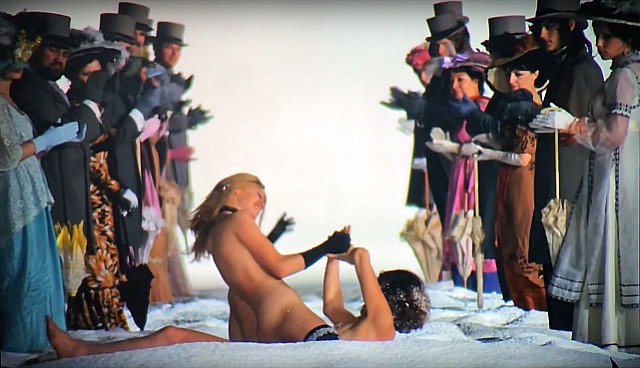
It’s still a crisp, clean, jewel-like film, and I’ll never stop worshipping that final shot of those well-dressed 19th Century couples clapping approval as Alex and a scampy blond cavort in the snow. But man, it’s really cold and almost induces nausea from time to time. And a fair amount of humor. I laugh every time I see that fat, middle-aged fuckface making kissy-face gestures at Malcolm McDowell‘s Alex in the prison chapel.

And anyone who says that the first act wasn’t meant as a darkly enjoyable romp is self-deluding. In the second and third acts Kubrick was lamenting or frowning upon the perverse, animal-like behavior of Alex and his three droogs, yes, but not in the first. Those who claim otherwise are ignoring the obvious out of loyalty to the legend.

Orange obviously delivered a moral point (morality without choice isn’t morality) but re-watch that first act and tell me Kubrick wasn’t getting off on some level…that he wasn’t savoring a certain enjoyment while shooting those acrobatic beatings and that horridly cruel musical rape in Patrick Magee‘s home, not to mention the one that almost happens before Alex’s gang challenges Billy Boy’s crew to a rumble.

And that long, slow third act in which Alex has to suffer an endless post-penal gauntlet…punished and clubbed and condemned ad infinitum. And those idiotic deux ex machinas! Meeting the same old alky and getting beaten up by his old friends, discovering that his old droogies have become hooligan police officers, accidentally staggering into Magee’s home a second time and apparently not recalling what had happened there before, as evidenced by Alex moronically singing “Singin’ In The Rain” while taking a bath…the mind reels.

Read more