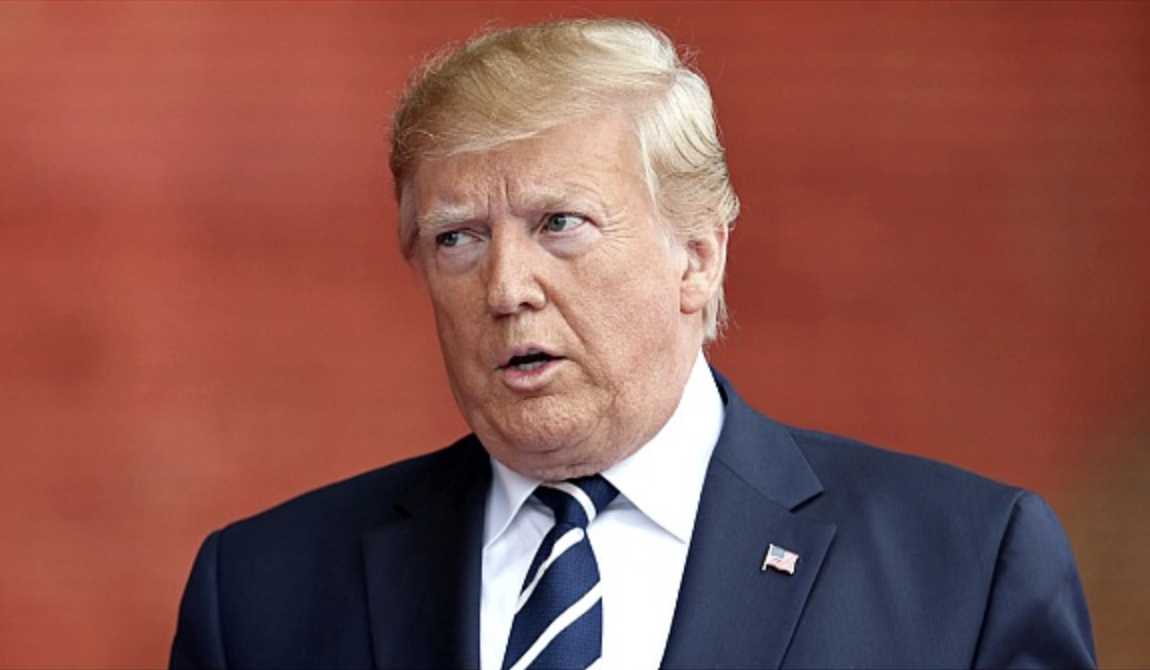
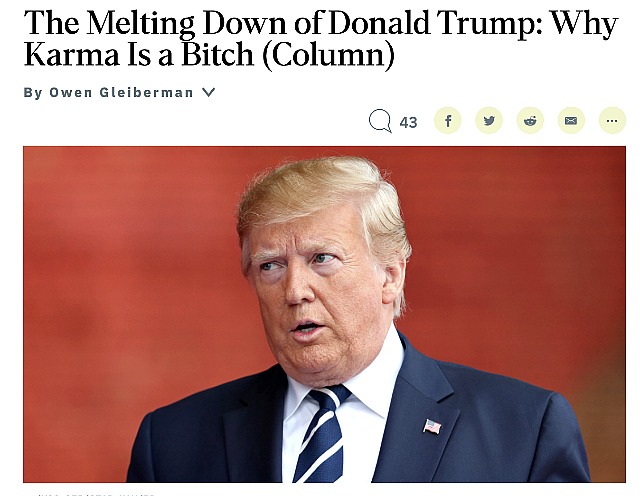
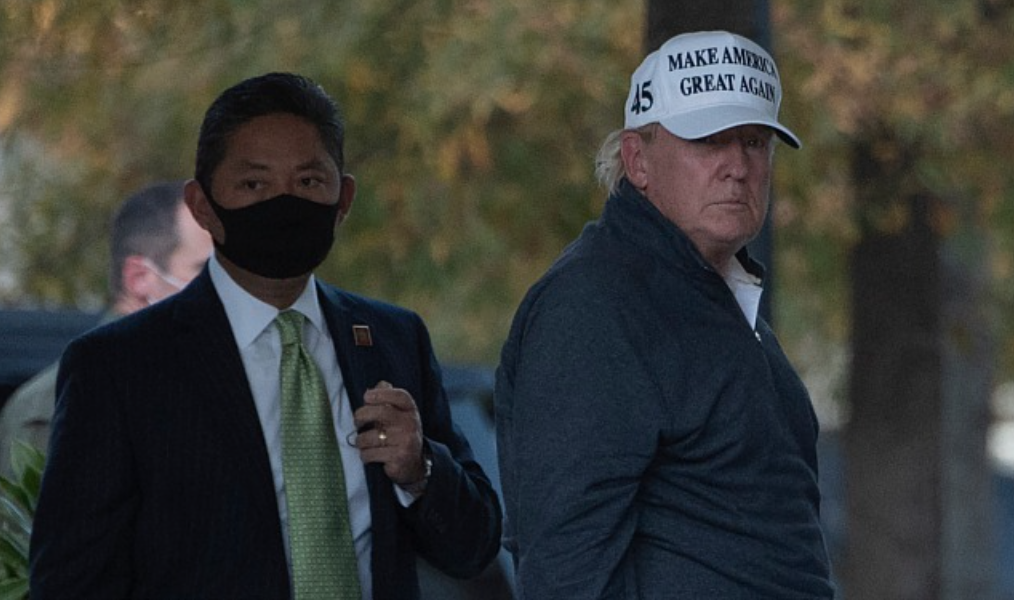
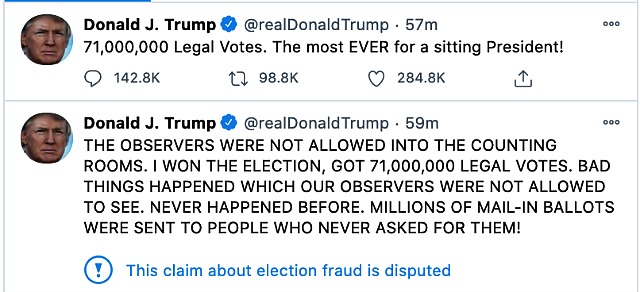
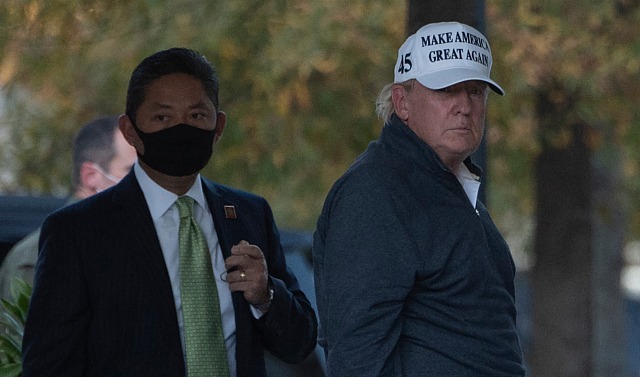
From Owen Gleiberman‘s “The Melting Down of Donald Trump,” posted this morning: “Trump may still try to stage some sort of legal-electoral ‘coup,’ but to anyone tethered to the real world, his protests will increasingly sound like the face-saving whine of someone who can’t admit, or even compute, the prospect of his own defeat.
“On the deepest level, ‘The mail-in votes in Pennsylvania don’t count!’ is a fascist version of ‘The dog ate my homework!’ It’s Trump clinging to the presidency and trashing the rule of law, but mostly it’s Trump doing all he can to refuse his comeuppance, to deny that he’s now the loser he has spent his whole life running from being.
“[Classic villain comeuppance is] what happens, most spectacularly, in The Wizard of Oz, when the Wicked Witch of the West is destroyed before our eyes in a catharsis of long-finger-nailed rage. ‘Look what you’ve done!’ she screams. ‘I’m melting, melting!’ And then, with a touch of despair that can almost be called tragic, she says, ‘Oh, what a world, what a world’! She’s talking about a world that has taken away her power. She then crumples like a melted crayon, a humiliated mass of thwarted ambition.
“That’s what just happened to Donald Trump. He wasn’t simply defeated, given the boot by the American people. He got melted down. And that’s why he’ll never admit it. He’s holding the entire American democratic process hostage to prop up what’s left of his broken ego.
“There’s a lot of talk about how even though Trump lost, ‘Trumpism’ is here to stay. It will be standing on the sidelines, waiting in the wings, warming up for a comeback. But what does Donald Trump stand for, as a political figure, once you take away his power? He’ll be just another fulminating talk-radio host. And, of course, the cornerstone of his brand will now become the very notion that the presidency was stolen from him. He’ll make that the centerpiece of every rally, every Fox News appearance, every talk-radio hour he presides over.
“But it will all be Trump spinning his brokenness, licking his wounds. The Trump faithful, the true believers — the cult — will tune in. But I suspect that for most of America, Trump will simply sound like the sore loser he is. So let him spin away. It’s time to say goodnight to the bad guy.”
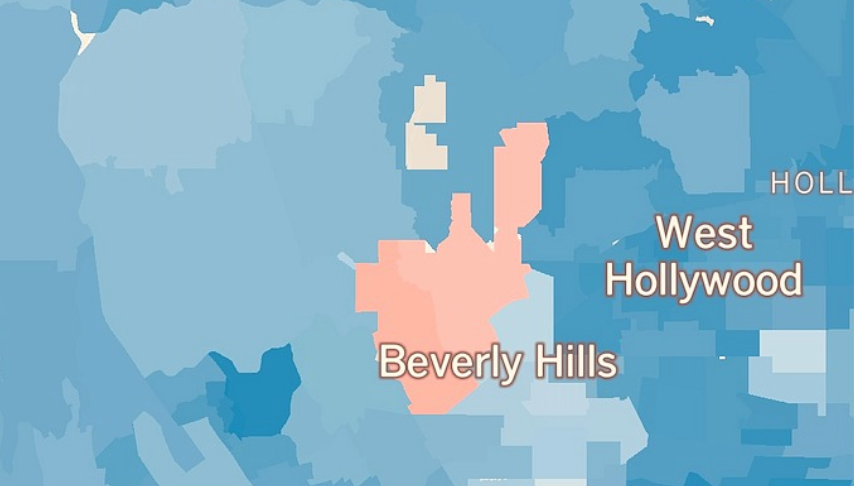
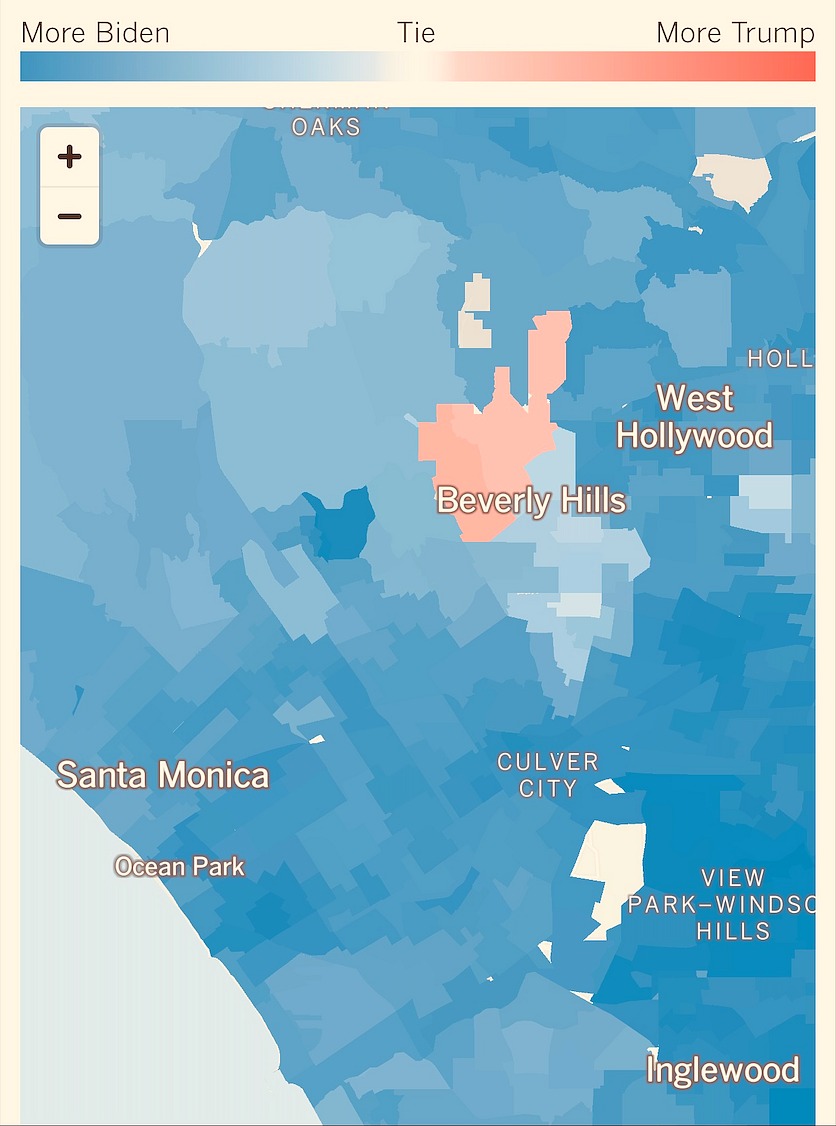
I never suspected that a majority of homes in the Beverly Hills “flats” (north of Santa Monica Blvd. up to Sunset Blvd.) are owned by rightwing Trump supporters. I always thought the Southern California loonies mainly lived down in Orange County. But according to data compiled by the Los Angeles Times, Beverly Hills is indeed a red stronghold.
“The largest concentration of Trump support in central Los Angeles is located in the affluent residential areas of Beverly Hills and Trousdale Estates.
“Beverly Hills precincts that voted for Trump start directly across Santa Monica Boulevard from the Rodeo Drive shopping district, which has been the site of frequent pro-Trump demonstrations in recent months. Many businesses in that district had closed and boarded up in advance of Election Day as a precaution against potential unrest.”
Deranged and self-deluding as Trump has always been, you’d think that with the election called and the odds of a miracle turnaround virtually nil that a dignity impulse would kick in. That would mean summoning at least an attempt to behave in a classy manner. He wouldn’t have to mean it, and he could always revert to his natural default self after he leaves Washington for New York and Mar a Lago in late January. He must realize deep down that he’ll never pull off a reversal of fortune. And yet he continues to fret and whine and accuse the deep state of manipulating the vote, etc.
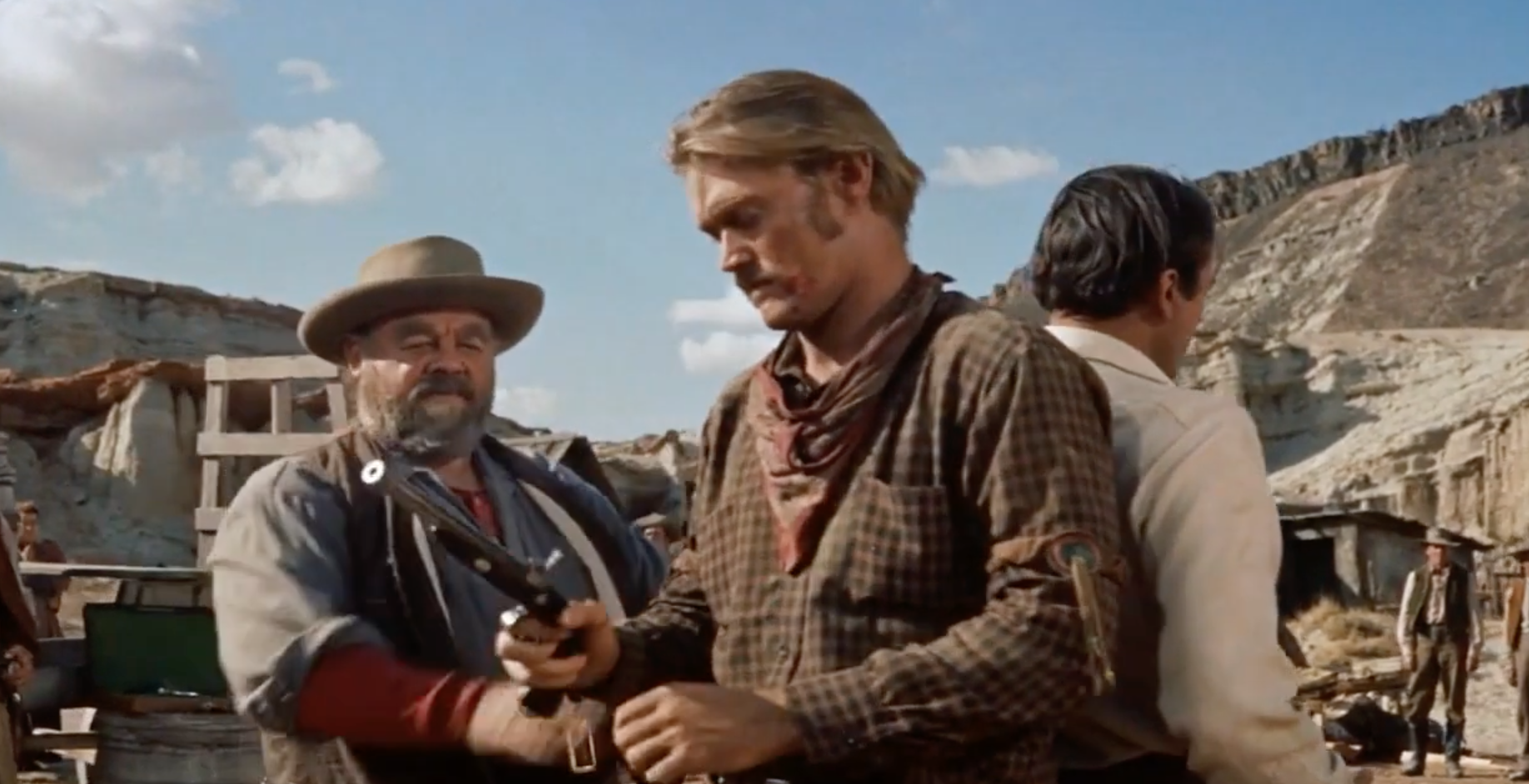
This Big Country gun duel scene is about courage and character, or the lack of. I’m not saying Joe Biden is 100% analogous to Gregory Peck‘s character in terms of behaving in a sane, sensible and steadfast way, but he’s close enough. It’s also fair to say that right now Donald Trump‘s behavior is at least somewhat similar to that of Chuck Connors, as the no-good scurvy varmint son of Burl Ives.
What well-known, present-tense figure is somewhat similar to the stern and disdainful Ives? I’d say Ives represents the attitude of nearly everyone right now…everyone except for hardcore Trump friendos, the ranks of which are slightly thinning as we speak.
With Joe Biden having taken slight leads in Georgia and Pennsylvania, Fat Donny is almost certainly finished. As in fuhgdedaboudit. As in the clouds have parted and beams of sunlight are streaming down upon the crop.
But you can pretty much take it to the bank on a 98% basis — the foulest, lying-est, and most horrific President in U.S. history has lost his bid for re-election. Thank God in heaven and may all the angels sing in harmony as we drop to our knees in gratitude.
If you think I’m being delusional or incautious, ask Vox — they called it for Biden early this morning.
Watching Real Time with Bill Maher this evening is going to be absolutely jubilant.
Trump: Help me, Jesus…help me vanquish my enemies and lend a hand. I mean, I won and they’re trying to steal it. Jesus: You sure? Trump: I won it all. Georgia, Florida, North Carolina…look at the map. A wonderful, glorious thing. Jesus: But Georgia’s still in play, no? The Atlanta vote is being counted as we speak. Trump: But they’re trying to steal Pennsylvania, and it’s mine. I won it and they’re crooked thieves. Jesus: Is Philly counted? Not until Friday or Saturday, I’ve heard. Trump: The Democrats are evil. They’re manufacturing fake votes and throwing my ballots out. Jesus: What’s my name? Trump: Jesus of Nazareth. Jesus: Do you really expect me to step in and just…what, change your life with a wave of my hand? Trump: It would be a good thing. The right thing. Jesus: I don’t fix elections. I’m here to help you spiritually. Trump: Can you get the Southern District of New York prosecutors off my back? Jesus: I don’t do that either. Trump: But I need your help. Or…you know, your guidance. I need to serve for another four years. I’m trying to fulfill God’s plan, as you know. Jesus: You think? Trump: The Evangelicals love me. They want me to strike down Roe vs. Wade. It’s my destiny.
10:55 pm [posted by a smart guy named Mike Vatis]: “Just a reminder for people losing their minds right now. Biden was not really expected to win, and does not need to win, Texas, Florida, Georgia or North Carolina. A landslide win by Biden that included some of those states would have been wonderful, a clear renunciation of Trumpism. But the greater likelihood has always been that the race would come down to Wisconsin, Michigan and Pennsylvania — again.
“Plus we’ve known for a long time now that the early vote counts (i.e., the ones you’re seeing now) in Michigan and Pennsylvania would comprise election-day votes, which would favor Trump, as many Democrats voted by mail or voted early, and those votes are tallied later. And we’ve also known that, because of the way different votes are counted in these key states, Trump’s strategy has been to (a) declare victory tonight or tomorrow morning based on the early vote counts, and (b) use the courts (and public disturbances) to stop the counting of any mail-in votes after tonight.
“DON’T PLAY INTO HIS STRATEGY BY WETTING YOUR PANTS, PEOPLE!
“All the votes must be counted, period. We won’t know the results for several days. That has always been the likely scenario, and that is what everyone should have been preparing for. Don’t let dashed hopes of a resounding early victory for Biden now drive you into Trump’s trap of believing that Trump somehow won.
“Also: Biden has an alternative path — if he does not win Pennsyltucky, but takes Wisco and Michigan, he can still get to 270 if he takes Arizona and the single electoral vote accorded to the Omaha congressional district. That alternative path is still very much alive, too. So there may still be some very good news tonight out of Arizona and Omaha. And there may be some very good news out of Wisconsin early tomorrow morning (once Milwaukee county votes are tallied). But Michigan and, especially, Pennsylvania, will take more time. So be patient, and don’t do Trump’s work for him.”
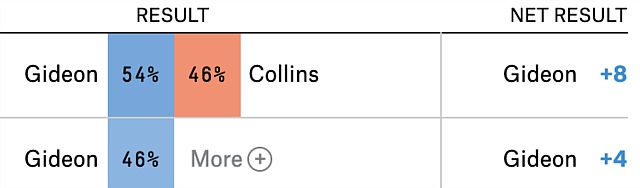
10:45 pm: A recent 538 poll (posted on 11.2) had Demicratic challenger Sarah Gideon leading Republican incumbent Susan Collins in the Maine Senatorial race. The latest AP tally of today’s Maine vote has Gideon well behind Collins. In short, the 538 poll bore very little relation to what was in the minds of Maine voters.
9:55 pm: Anyone who claims he/she knew that the Biden vs. Trump vote would come down to a cliffhanger is lying. Two or three (including Joe Biden) predicted it would be closer than expected, but almost everyone believed that a decisive Biden victory was in the cards. Some were predicting a possible landslide.
What’s unfolding may well turn into a variation of Bush vs. Gore. Who knows? But what a mess, what a shocker. And there’s definitely something wrong with the polling industry. It’s infuriating that they got it so wrong.
9:10 pm: James Carville to MSNBC viewers — “Come down off the ledge, put away the razor blades and the Ambien….hang in there, we’re gonna be fine. The [final] count is gonna be good for Biden. I don’t mind putting the champagne on ice. I’ve waited four years for this…I don’t mind waiting another four days.”
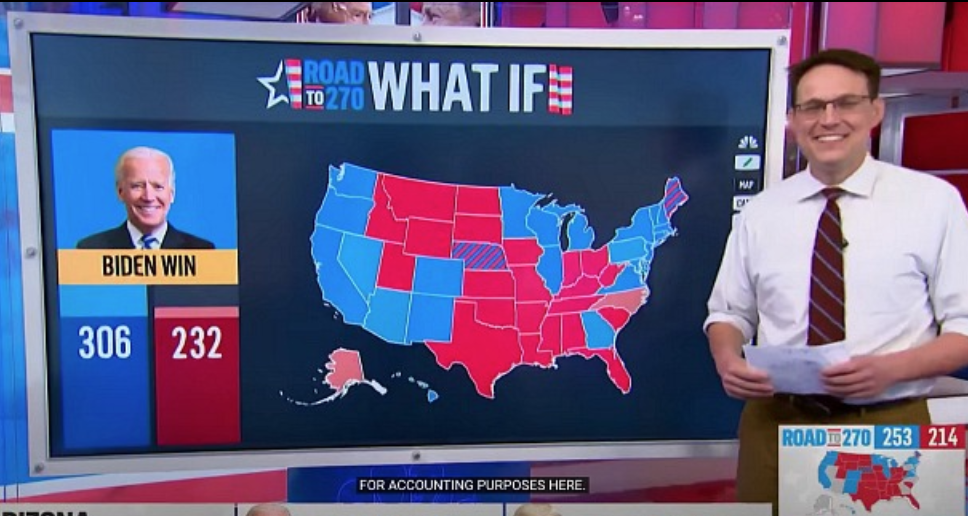
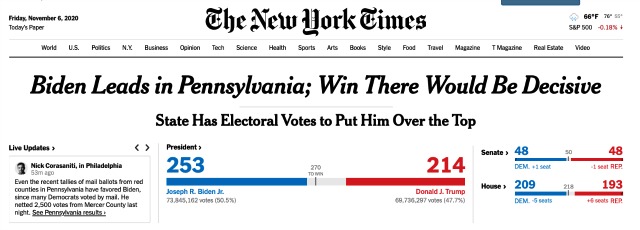
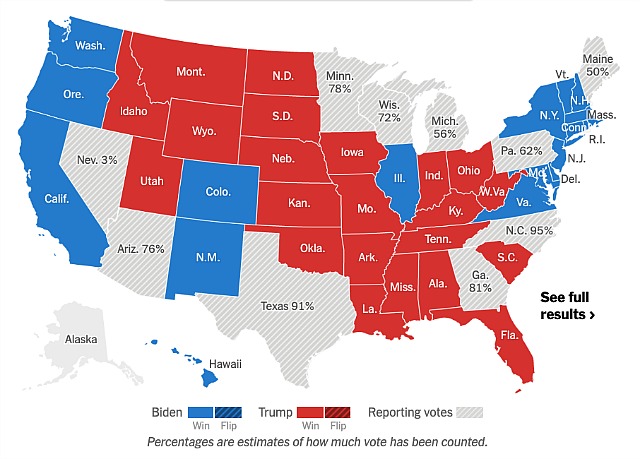
As of right now (9:20 pm) Biden has 213 electoral votes vs. 136 for Trump. It’s all going to come down to the final tallies in North Carolina, Pennsylvania, Wisconsin, Michigan and Arizona — a good portion of the remaining votes being mail-ins.
7:50 pm: The tight numbers are horrifying. I’m going through an out-of-body experience. I feel like mybrainismelting. I’m blaming the pandemic for his horrible evening, because we’re mainly talking about “live” voting and that means mostly Republican votes since righties don’t get Covid.
So yes, mail-in ballots could save Biden-Harris, but their stunning under-performance is mainly due to purported associations between Biden-Harris and hardcore p.c. lefty messaging….wokesters, cancel culture, looters, p.c. fanatics, Critical Race Theory, p.c. hatred of cisgender white guys, “Defund The Police” insteadof “Re–ThinkThePolice“, Robin DiAngelo‘s “White Fragility”, the Portland and Seattle marauders, the BLM ers and the Rosanna Arquette metaphor.
Yes, I know — there’s no rational reason to believe there’s strong linkage between the agendas of Joe Biden and odious wokesters, but how else to explain what’s happening?
You can’t tell me anyone gives a damn about Hunter Biden‘s laptop. Are older white cisgender male voters (including Cuban-Americans) afraid of Kamala Harris being President, considering Biden’s advanced age? I believe it has to be the wokester factor. Two years ago an Atlantic article reported that a vast majority of Americans hate cancel culture. Tonight they registered their displeasure, or so I strongly suspect.
Yes, Virginia…the woke left may (I say “may”) have pulledofftheseeminglyimpossible — i.e., getting a compulsively lying, incompetent, sociopathic brute re-elected President of the United States. Maybe. Rank evil may actually triumph again. Trump supporters are voting for a form of socialsuicide and climatedestruction They actually voted to support recklessness, incompetency and stinking-to-high-heaven corruption.
If I was a pollster I would be thinking about ways to obscure or camoflauge my appearance…fake noses, fake beards, fat suits, Woody Allen-styled fishing hats. Mobs with clubs and ax handles will be out looking for them on Wednesday morning, and I wouldn’t altogether blame them.
All along the argument against Trump has been irrefutable, but somehow the radical left has managed to weaken or dilute the argument for Biden, which is ridiculous given that he’s never been and never will be in any kind of wokester pocket. He’s a sensible, practical old-school center-lefty.
I can’t believe this is happening. I’m almost having trouble breathing. This could still come down to mail-in ballots…right? Plus all the predictions about Democrats ending up flipping the Senate in their favor…even that isn’t happening. Lindsay Graham and Susan Collins have been re-elected! Good effing God!
6:55 pm: I don’t like all these close races. Same day voting is favoring Trumo; mail-ins will mostly help Biden. There are nonetheless millions of voters out there who are flat-out loose-screw nihilists…they want to give an incompetent, lying criminal another four years, if only to spite the wokesters.
North Carolina numbers are driving me crazy. Trump has taken the lead in Ohio. Once the Pennsylvania mail-in ballots are counted (probably by Friday), it’ll be okay. I’m nonetheless nervous, anxious, biting my nails. And I’m feeling really angry at the pollsters. I want to literally punch them out.
Friendo: “The polls are off like they were in 2016. There should be a total overhaul of the polling formula. I hope to God this doesn’t extend for weeks and weeks. There’d better not be recounts.” Journo pally: “I’m feeling some 2016 deja vu.”
5:25 pm: A mere Biden victory will not be emotionally satisfying. I want Biden to beat Trump badly, or at least fairly badly. Right now…who knows? And what’s with those Trump-supporting Latino males?
5 pm: Red and blue states are voting accordingly. Biden has 85 electoral votes vs. Trump’s 55. Many millions want the beast to stay in the White House, and many other millions not only disagree but are slapping their foreheads in disbelief.
4:30 pm: This is like Oscar night only much, much better, so I guess I’ll start timestamping with running commentary starting around…uh, now. Biden has taken Virginia and Vermont, and will probably win North Carolina. Oh, and Trump has won Kentucky, West Virginia, South Carolina and…uhm, Indiana. In the cards. Florida will probably go for Trump. (Panhandle rubes + an apparently sizable percentage of Miami-Dade Latino males.) And also Georgia, it seems.
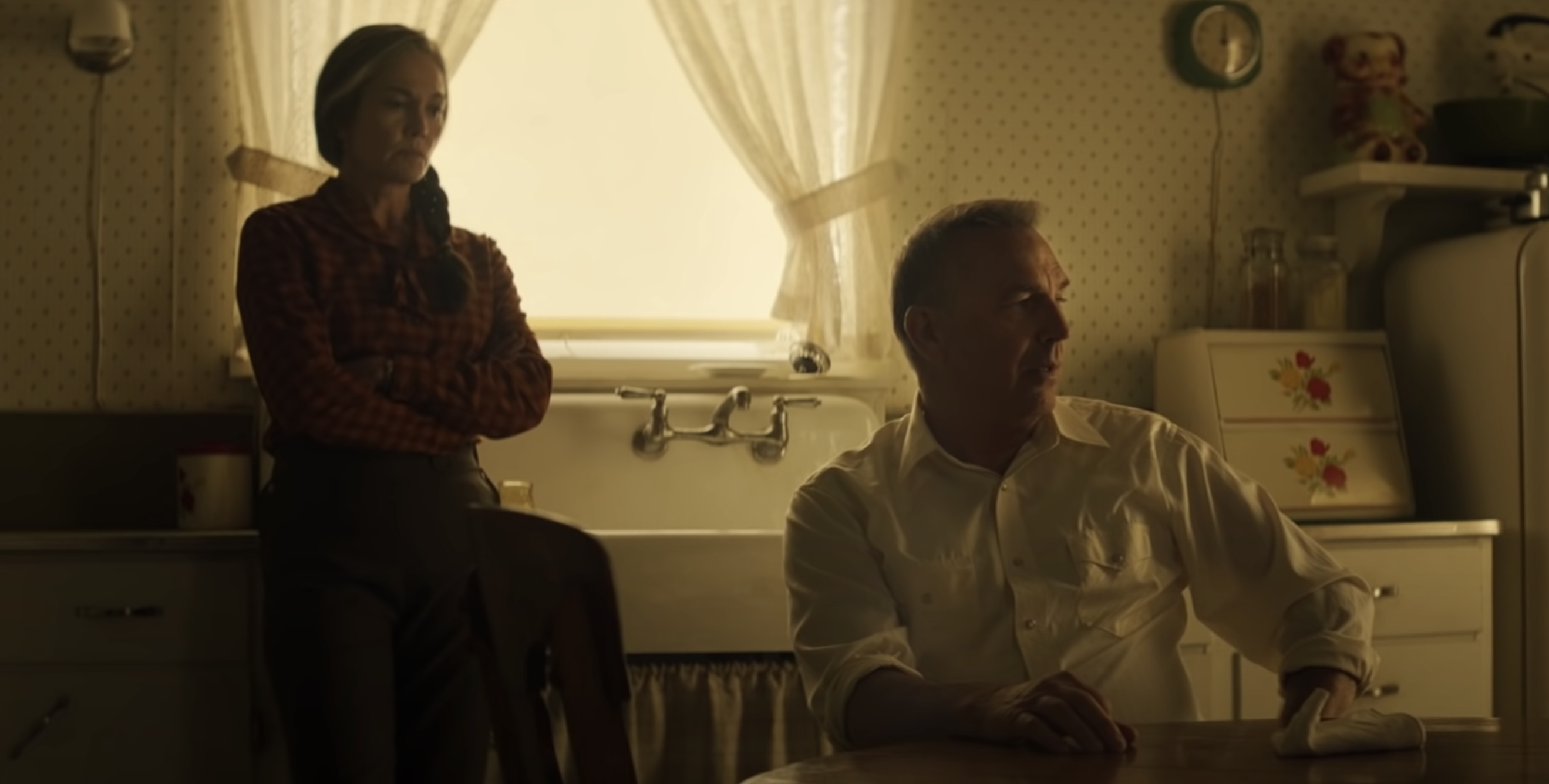
My first thought about Thomas Bezucha‘s Let Him Go (Focus Features, 11.6), which is a kind of period western, set 50 or 60 years ago, about family, horses, children, continuity, guns, axes and fingers…my first reaction was “wow, this is really well directed…so nicely composed, exacting, unafraid of silences, confidently paced, grounded.”
So right away I relaxed and settled in. This’ll be good, I told myself. Quite obviously. So well acted all around, so commanding, so nicely honed. And Guy Godfree‘s cinematography and Michael Giacchino‘s score are perfect. I was purring. I love films like this! I felt so good about it that I put some popcorn into the microwave. You know what I mean. If a film is really bringing it, popcorn completes the mood.
And then something happened around the 80-minute mark, and I went “what the hell?”
That’s all I’m going to say. I’m not going to elaborate except to say that the film, which is about a pair of grandparents (Kevin Costner, Diane Lane) who’ve lost their adult son in a fatal horse-riding accident, and months later are looking to see about the welfare of their three-year-old grandson after their son’s widow (Kayli Carter) has married a primitive bumblefuck who lives with a family of ornery polecat varmints a la Animal Kingdom and is headed by a cigarette-smoking Ma Barker sociopath (Lesley Manville)…I’ll only say that things turn rather violent around the 80-minute mark and hoo boy.
After it ended an excerpt from Barry Hertz‘s Globe and Mail review kinda pissed me off. It called Let Him Go a “skillfully executed thriller that is narrowly aimed at one demographic — audiences over 50 who like a little violence with their late-life dramas — but succeeds at entertaining just about anyone who comes across its dusty, blood-soaked path.”
So if a movie is smoothly assembled and takes its time building characters and moves at its own steady pace, it’s strictly an over-50 thing? Because…what, 45-and-under audiences require something noisier and punchier and faster-paced or they won’t sit still? My God, what’s happened to western civilization by way of movie culture? Because the cinematic value system that Hertz has described is, like, really fucked up.
Hats off to Bezucha, who directed, produced and wrote the screenplay adaptation of Larry Watson‘s same-titled 2013 novel. Bezucha knows what he’s doing. Let Him Go feels like it might have been directed by David Fincher or Fred Zinneman or William Wyler.
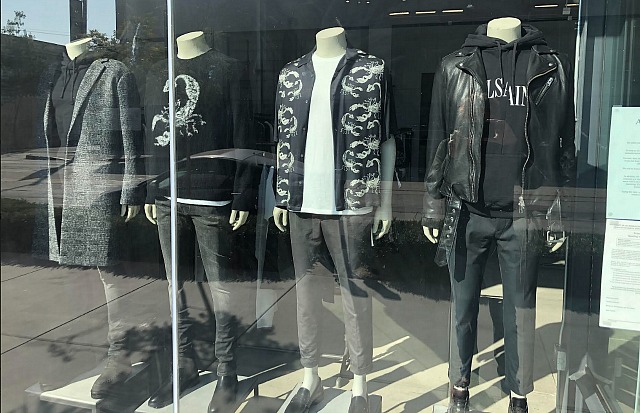
If you’re going to mount plywood over your display windows for fear of an election riot, do it with style and flair.
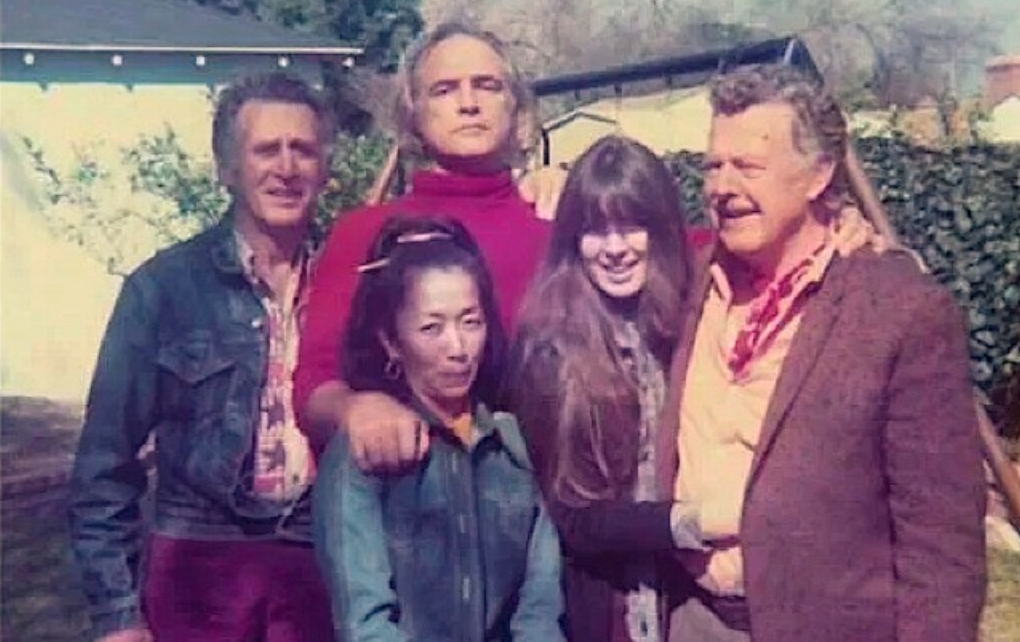
Marlon Brando and friends sometime around ’71. Same appearance and hair length as he displayed in The Nightcomers and Last Tango in Paris. The woman is Jill Banner (The President’s Analyst), whom Brando met during the filming of Christian Marquand‘s godawful Candy (’68). Banner died in a Ventura Freeway auto accident in August ’82.
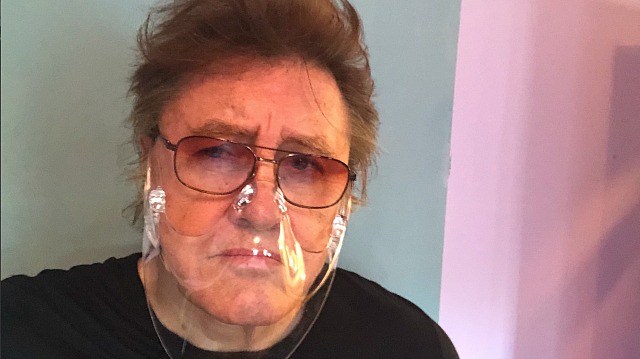
A pair of clear plastic masks arrived today. Much better than common masks. You can breathe more easily, for one thing.
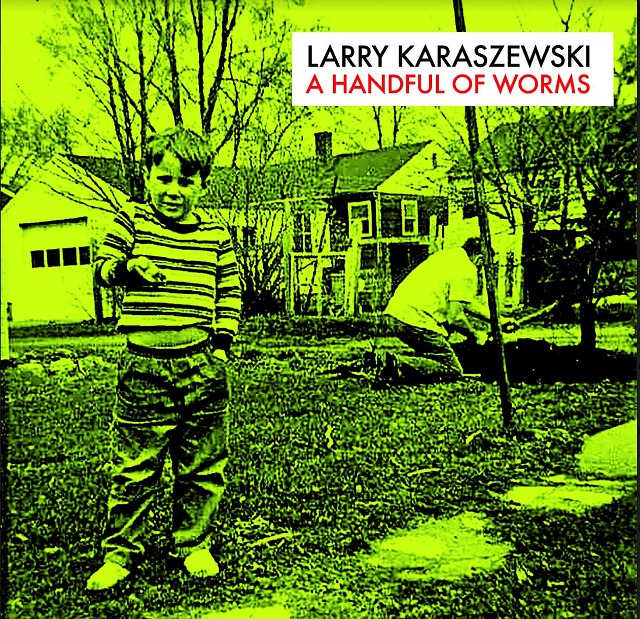
Larry Karaszewski’s “A Handful of Worms” was a decent album for a first-time effort. Alas as we all know, Larru abandoned music and, to our general benefit, turned to screenwriting.
Most appallingly dressed generation in American history, and perhaps in the history of the world.
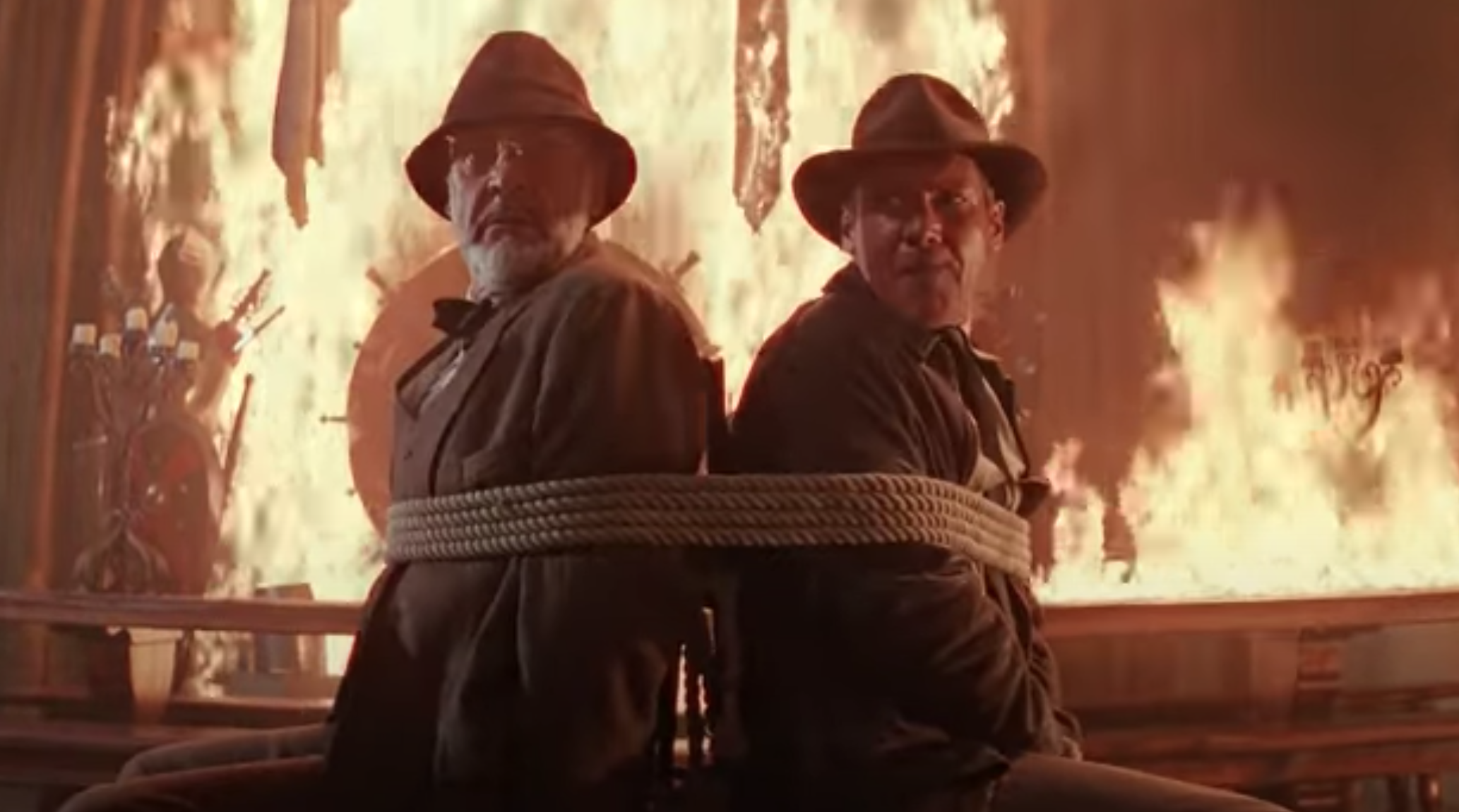
“He was my father…not in life but in Indy 3. You don’t know pleasure until someone pays you to take Sean Connery for a ride in the side car of a Russian motorcycle bouncing along a bumpy, twisty mountain trail and getting to watch him squirm. God, we had fun. If he’s in heaven, I hope they have golf courses. Rest in peace, dear friend.” — Harrison Ford to Variety‘s Elizabeth Wagmeister.
I love “if he’s in heaven”…very few tributes step out of the usual realm.
In hindsight, Ford would probably agree that the motorcycle chase sequence is lively but somewhat routine, but the revolving fireplace barrier bit is a classic. Like almost everything in this 1989 film, it was perfectly choreographed and filmed, and cut just so. Tip of the hat to dp Douglas Slocombe and editor Michael Kahn.
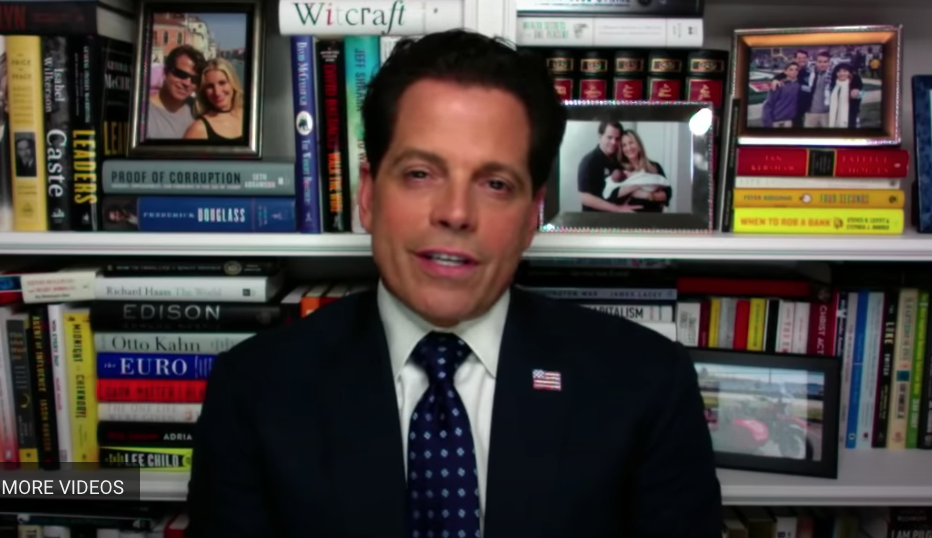
“Oh, yeah, he’s definitely going to leave. The secret about people like [Trump} is, a lot of bluster and a lot of overcompensation, but most boys are actually cowards. And I can tell you the President does not like personal confrontation. He’ll tweet at you, but then if he sees in you in person, like was with Chris Wallace last summer, he tries to act lovey-dovey.
“It’s very typical, that middle-school bullying behavior…he’ll leave. The Secret Service and the Marines have already talked about the idea of him not leaving and who’s going to escort him out of the White House. There’s no chance that’s gonna happen. The defeat, the electoral defeat…he’ll be the third U.S. President in the last 120 years to only serve one term. That’ll be humiliating enough. I don’t think he wants to be physically escorted out of the White House by the U.S. Secret Service.
“His personality is bluster and saying things, but he really isn’t a doer that way. I think he will blow out. He’s a showman, but he actually hates the fucking job. Barack Obama has him read perfectly. [“He’s a bullshitter.”] He doesn’t like the arduous nature of the job. He doesn’t like the pain in the ass [stuff].” — former White House Communications Director, all-around New York financial hotshot and gregarious media gadfly Anthony Scaramucci, speaking with The Sun‘s Henry Holloway.